The Biological Cost of the Modern Workplace
For operational leaders and human resources executives, team performance is traditionally analyzed through productivity metrics, task-tracking software, and workflow efficiency. However, a silent biological variable directly dictates the cognitive bandwidth of any workforce: cortisol. In highly digitalized, fast-paced corporate environments, the constant overstimulation of screens and isolation from natural settings keep the human body in a low-grade, chronic state of fight-or-flight alert.
This phenomenon leads directly to mental fatigue, creative blocks, and systemic burnout. To mitigate this hidden operational drain, progressive occupational health strategies have begun to quantify the regulatory impact of an accessible, yet frequently overlooked asset: Vitamin N (Nature). Spending time in green spaces is no longer viewed merely as a weekend leisure activity; it is a measurable biological intervention required to reset the body’s stress response systems.
The 20-Minute “Nature Pill”: Quantifying Cortisol Reduction
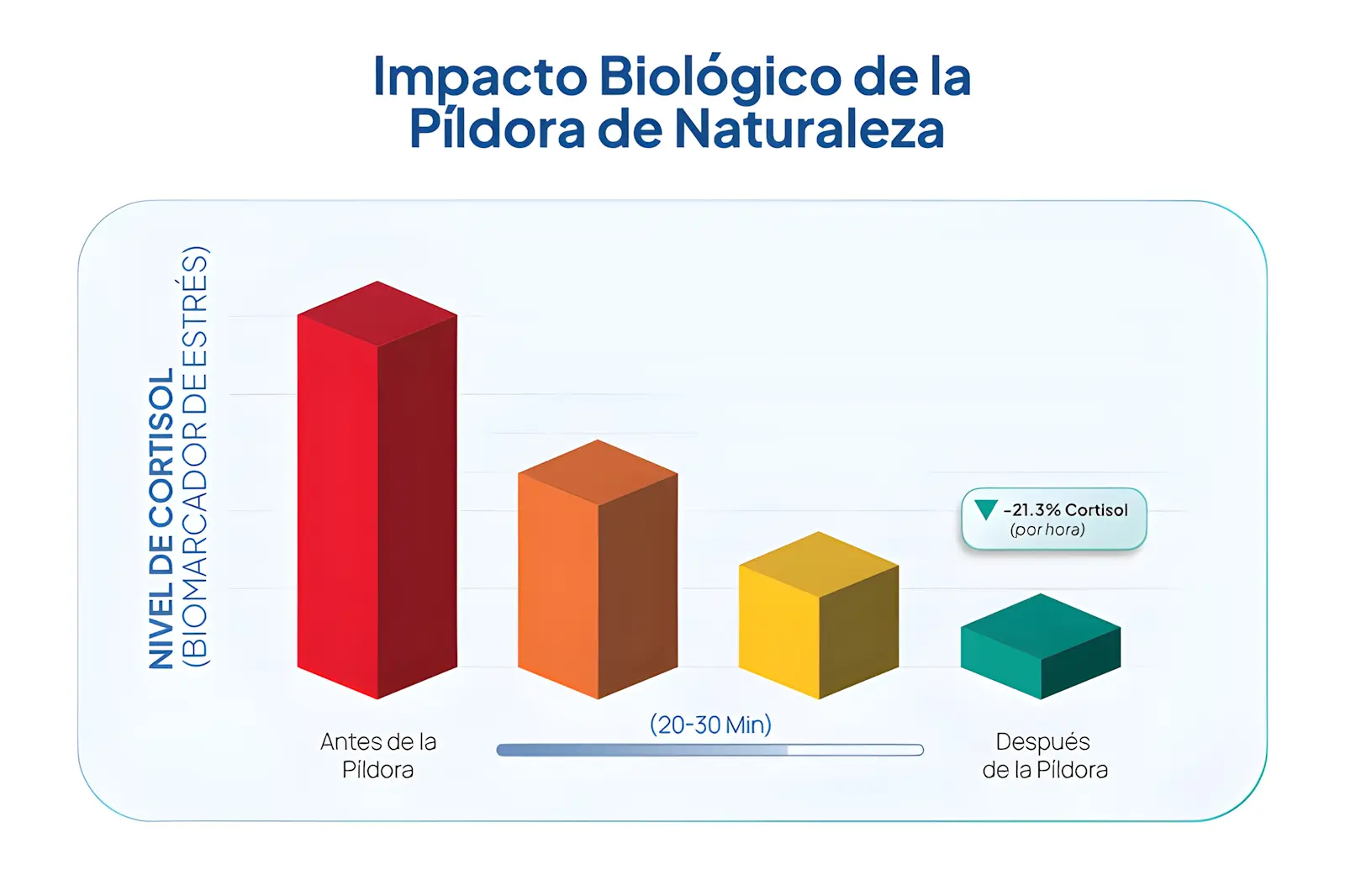
The efficacy of environmental exposure is no longer based on vague wellness concepts; it is backed by precise clinical data and salivary biomarkers. A groundbreaking study published by the University of Michigan in Frontiers in Psychology established the quantitative parameters of what researchers call a “nature pill.” The study demonstrated that spending just 20 to 30 minutes sitting or walking in a place that provides an authentic sense of nature significantly drops the body’s primary stress hormone.
Specifically, the data revealed that a brief nature experience produces a 21.3% drop in salivary cortisol levels per hour, showing its highest efficiency score within the first 30 minutes of exposure. To make this nature pill function with clinical precision, the study defined strict operational conditions: the experience must occur in daylight, involve low-intensity aerobic activity (such as a casual walk or sitting), and completely eliminate digital distractions like phone calls, social media, or internet browsing.
[The Urban Stress Loop]
Hyperconnectivity ──> Cortisol Spike ──> Cognitive Fatigue ──> Creative Block
[The “Vitamin N” Reset]
Digital Disconnection ──> Green Exposure (20-30 min) ──> 21% Cortisol Drop ──> Attention Restoration
Cognitive Restoration and Unlocking Creative Velocity
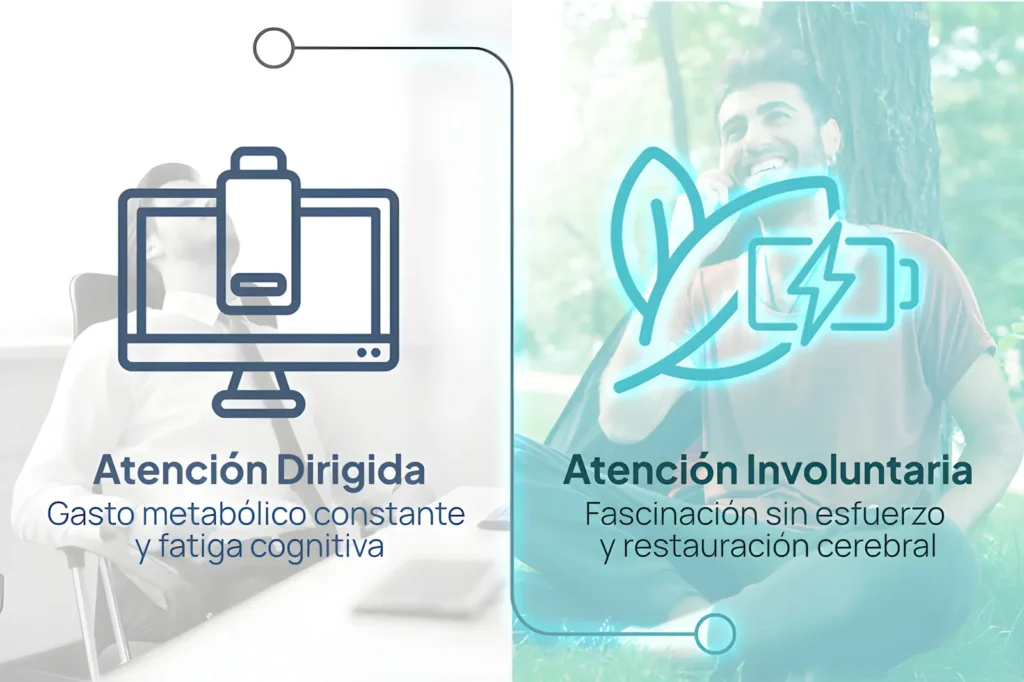
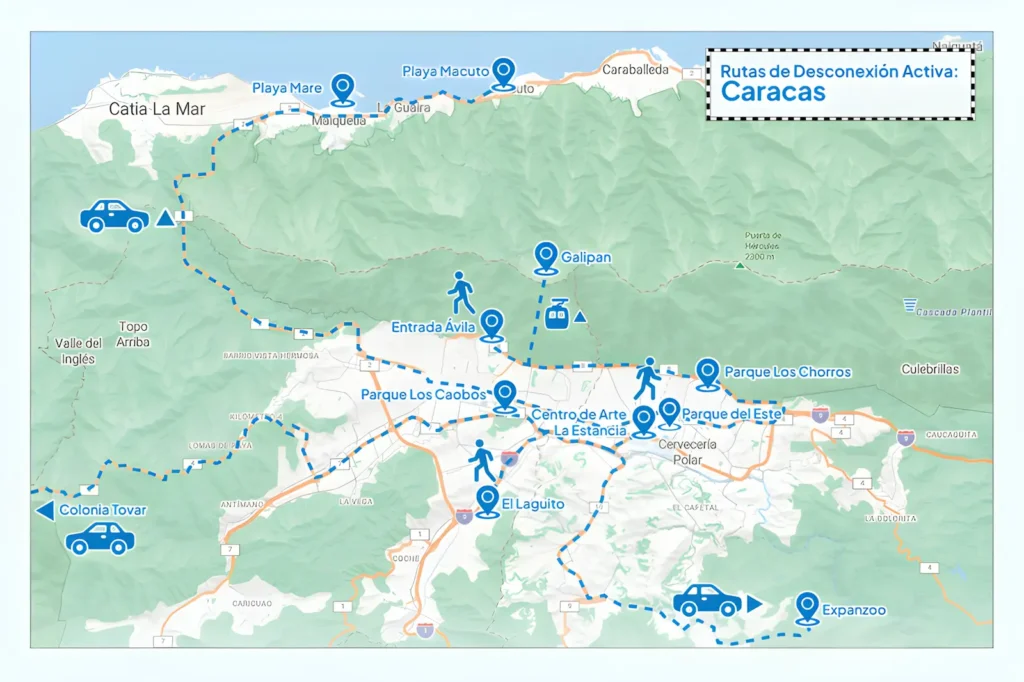
Why does the human brain respond so rapidly to a green landscape, such as the trails of El Ávila or the open pathways of Parque del Este? The answer lies in Attention Restoration Theory (ART). In a standard office setting or front-desk environment, employees utilize “directed attention”—a conscious, high-energy metabolic process required to filter distractions and focus on technical tasks, which inevitably drains cognitive reserves over long hours.
Conversely, natural environments trigger “involuntary attention” or effortless fascination. The intricate visual geometry of leaves, the movement of clouds, and natural ambient sounds engage the brain without causing fatigue. As detailed by Harvard Health Publishing on nature breaks, this shift allows the brain’s prefrontal cortex to recover and repair. By relieving the burden on directed attention, employees unlock lateral thinking, complex problem-solving abilities, and sharp strategic clarity upon returning to their operational duties.
Operationalizing Wellness: Integrating Nature into Corporate Culture
In the design of resilient 2026 organizations, sustained high performance is not achieved by demanding unbroken output; it is built by orchestrating strategic recovery periods that respect human biology. Promoting a culture of operational excellence requires understanding that brief moments of active disconnection—such as stepping away from the desk for lunch or taking a walking meeting through a courtyard—are direct investments in business continuity.
When workforce strategies incorporate these environmental principles, companies protect mental wellness, reduce absenteeism, and directly insulate teams from professional exhaustion. Allowing personnel to access Vitamin N within their weekly routines optimizes mental processing speeds and ensures that human capital operates from a position of renewed focus and clarity.
Conclusion: Natural Balance as a Competitive Asset
Integrating Vitamin N into the modern operational framework is a data-backed strategy to preserve high-level performance. By temporarily disconnecting from digital demands and utilizing local natural environments, executive leaders and their teams actively suppress cortisol, recover mental sharpness, and safeguard long-term health.
When corporate culture balances technical drive with structured environmental restoration, it doesn’t just protect employee wellbeing—it elevates the standard of the entire operation.