The Day-Rate Breakdown: Calculating the True Cost of Delay
For CFOs and Directors of Operations, a new provider joining the practice represents a calculated addition to clinical capacity and revenue forecasting. However, if that provider cannot bill for services on day one, they are transformed from a strategic asset into an immediate drain on overhead. Industry benchmarks show that a typical medical specialist generates between $5,000 and $10,000 in revenue per day. When provider credentialing and payer enrollment stretch across the traditional 90-to-120-day timeframe, a single physician’s onboarding lag can evaporate between $83,000 and $122,000 in forgone billings.
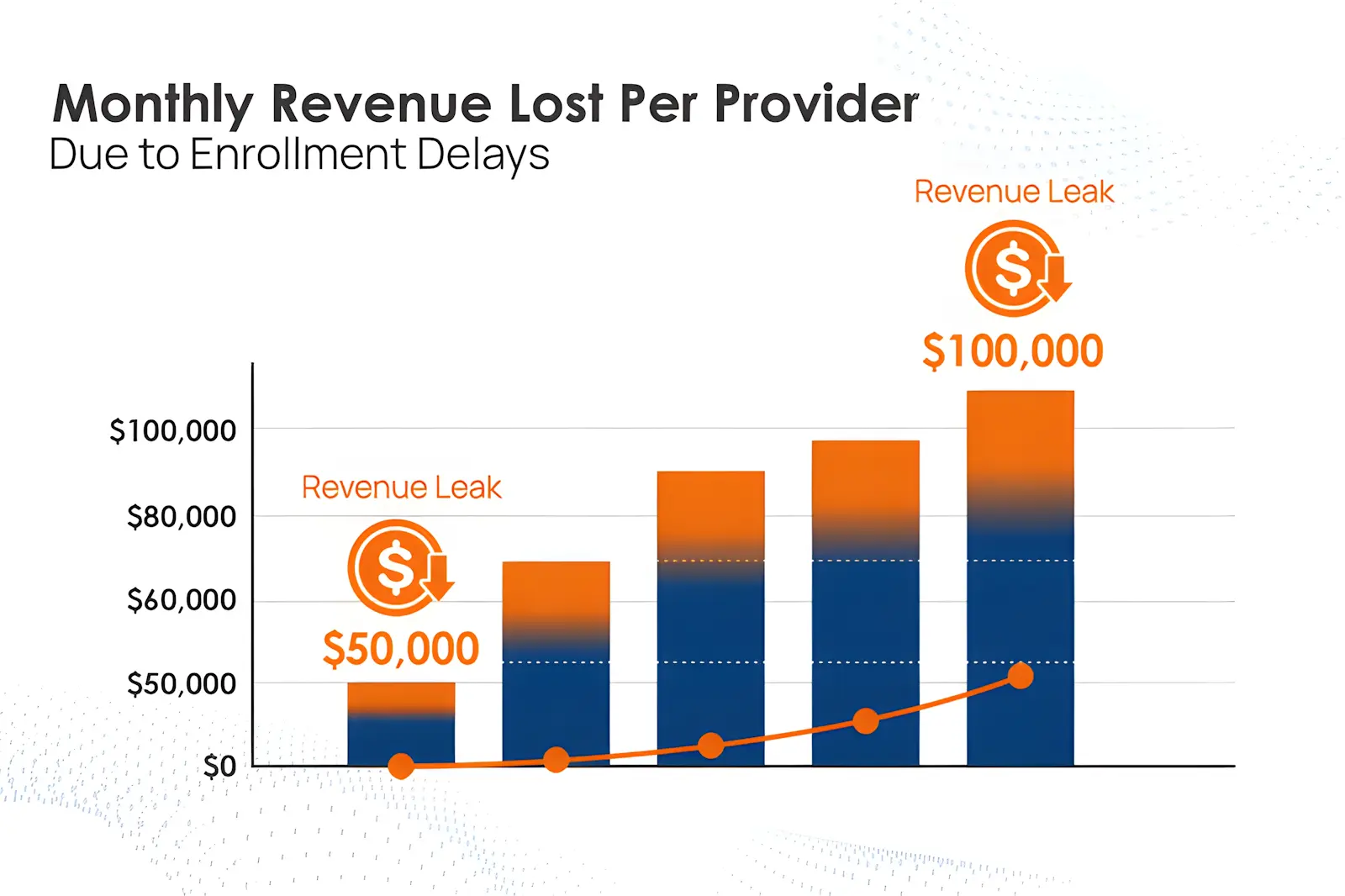
A recent 2026 healthcare operations survey revealed that 43% of organizations experience upwards of $50,000 in lost monthly billings explicitly due to credentialing friction, while a quarter of respondents lose more than $100,000 every single month. Over a fiscal year, these administrative delays result in seven-figure revenue leakage that can never be fully recovered. For a health system onboarding 10 new providers annually, this creates an uncollected billing pipeline deficit of $1 million to $1.5 million.
The Enrollment Limbo and Revenue Cycle Disruptions
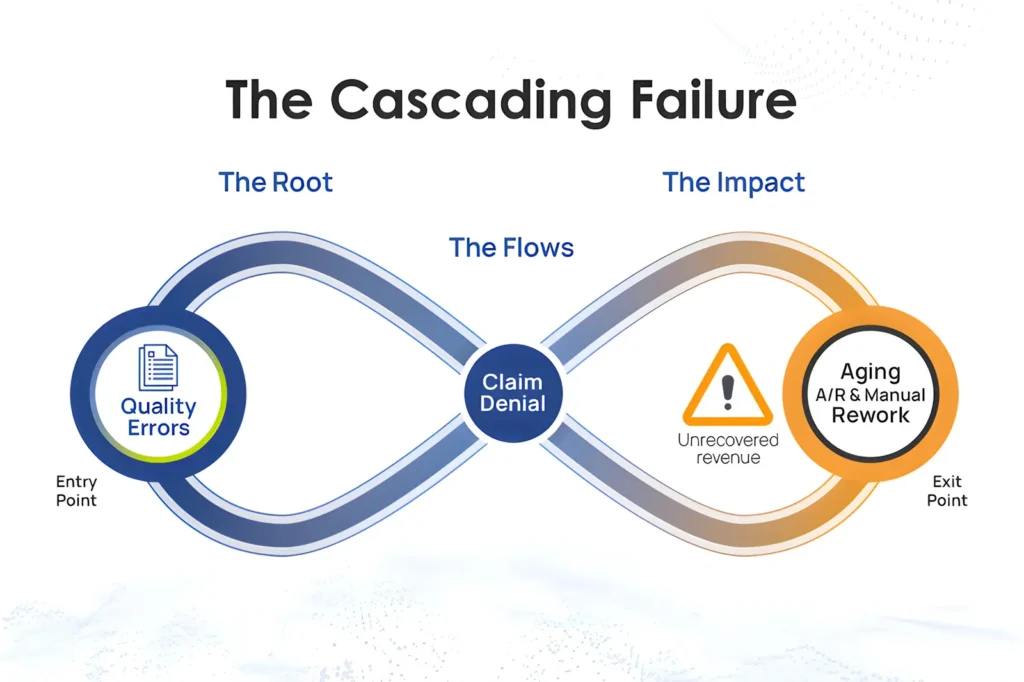
The financial damage of slow primary source verification extends far beyond initial idle time. Credentialing delays create a cascading bottleneck across the entire revenue cycle. According to data from the Medical Group Management Association (MGMA), over half of healthcare practices report a significant increase in claims denials tied directly to provider credentialing and enrollment mismatches.
When a practice allows a non-credentialed provider to deliver care under the assumption that claims can be billed retroactively, they enter “enrollment limbo.” Many commercial payers do not permit backdated effective dates, resulting in hard denials that force the practice to absorb the complete cost of care. Furthermore, for payers that do allow retrospective billing, the claims sit in accounts receivable (A/R) far beyond the standard 30-day target. This inflation of aging A/R disrupts cash flow predictability and requires billing staff to spend dozens of manual hours tracking, appealing, and reworking claims that should have been clean upon initial submission.
Shifting from a Passive Cost Center to a Revenue Engine
To resolve this systemic bottleneck, healthcare leadership must change how they view credentialing operations. Historically, credentialing has been managed as a passive compliance checkbox or a back-office administrative expense. In the modern healthcare economy, operational velocity must be repositioned as an active revenue-generating strategy.
Accelerating the credentialing timeline requires moving away from the reactive, manual tracking systems that plague 52% of traditional internal departments. When internal teams are bogged down by repetitive tasks—such as Council for Affordable Quality Healthcare (CAQH) 120-day reattestations, monitoring expiring document dates, and cross-referencing National Provider Identifier (NPI) data—files inevitably sit in limbo.
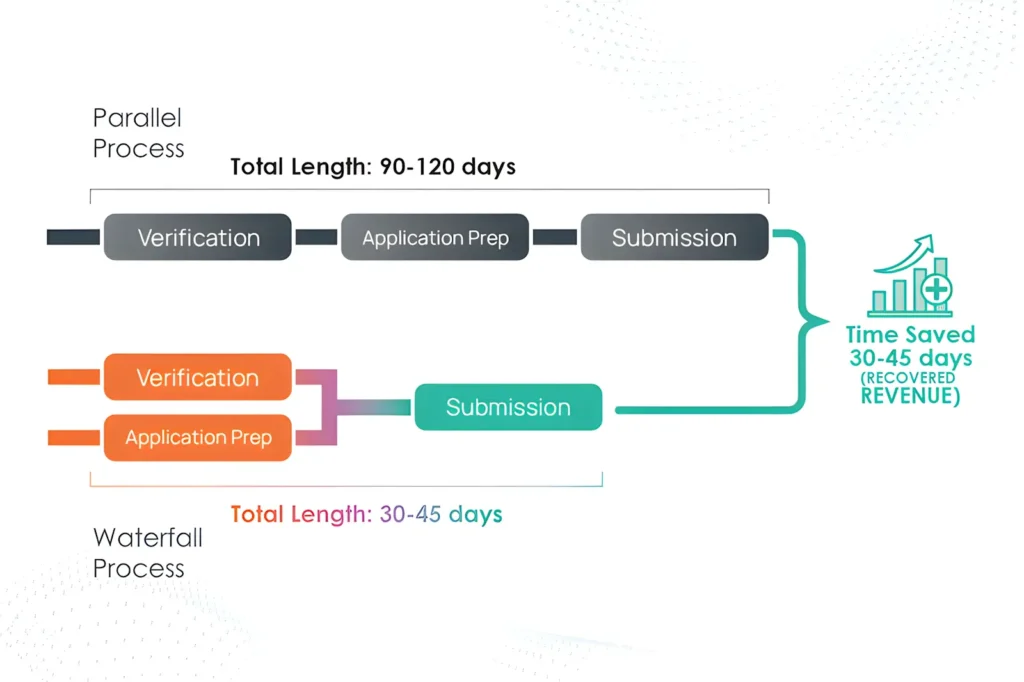
Strategic outsourcing to a specialized healthcare Business Process Outsourcing (BPO) partner eliminates these operational friction points. By leveraging parallel processing models—where payer enrollment application packages are pre-filled and staged concurrently with primary source verification—the standard 90-day cycle can be compressed down to 30 or 45 days.
The Bottom-Line Impact of Operational Velocity
Every day saved in the provider onboarding pipeline is a day of realized revenue. Transitioning to a high-performing, specialized credentialing workflow is not merely about cutting administrative overhead; it is about protecting the financial integrity of your organization and recovering millions in delayed or denied claims. By prioritizing speed, accuracy, and operational synchronization, healthcare executives can transform an administrative bottleneck into an absolute competitive advantage.
Stop letting onboarding friction delay your revenue generation; schedule a consultation with our Management Team today to assess your workflow and evaluate tailored partnership opportunities.