The Strategic Fallacy of the Simple Call Center
For decades, healthcare executives viewed the medical call center as a basic, transactional utility. Its primary objective was singular and reactive: answer the phone, match a patient to a calendar slot, and log the basic intake details. Schedulers were managed using generic customer service metrics like average handle time and raw call volume, operating on isolated software systems disconnected from broader patient workflows.
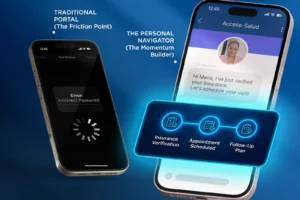
In the 2026 healthcare ecosystem, this legacy framework has become a major operational liability. Driven by changing patient expectations, widespread staff shortages, and the rise of multi-channel care, treating patient access as a simple phone pool creates severe workflow friction. Answering the phone is no longer the primary hurdle; the real challenge lies in managing complex provider capacity, resolving patient portal backlogs, and preventing data leakage across fractured care transitions.
To scale their operations effectively, forward-thinking medical groups are abandoning legacy setups. They are transforming traditional call centers into comprehensive, centralized, omnichannel triage units that actively direct and coordinate the entire patient journey: Care Traffic Control hubs.
The Omnichannel Care Triage Model
The rapid adoption of cloud-native Contact Center as a Service (CCaaS) platforms—a market projected to reach $9.4 billion in 2026—proves that patient access is being completely reimagined. Modern care traffic control moves beyond answering calls to managing a unified, digital intake infrastructure. This shift relieves on-site clinical teams of heavy administrative tasks, allowing them to focus entirely on direct patient care.
[Legacy Model – Fragmented Input]
Phone Lines ────> Legacy On-Premises PBX ────> Isolated Manual Schedulers ────> High Friction
Patient Portal ──> Overloaded Nurse Box ────> Delayed Inbox Responses ────> Care Leakage
[Care Traffic Control – Unified Omnichannel Hub]
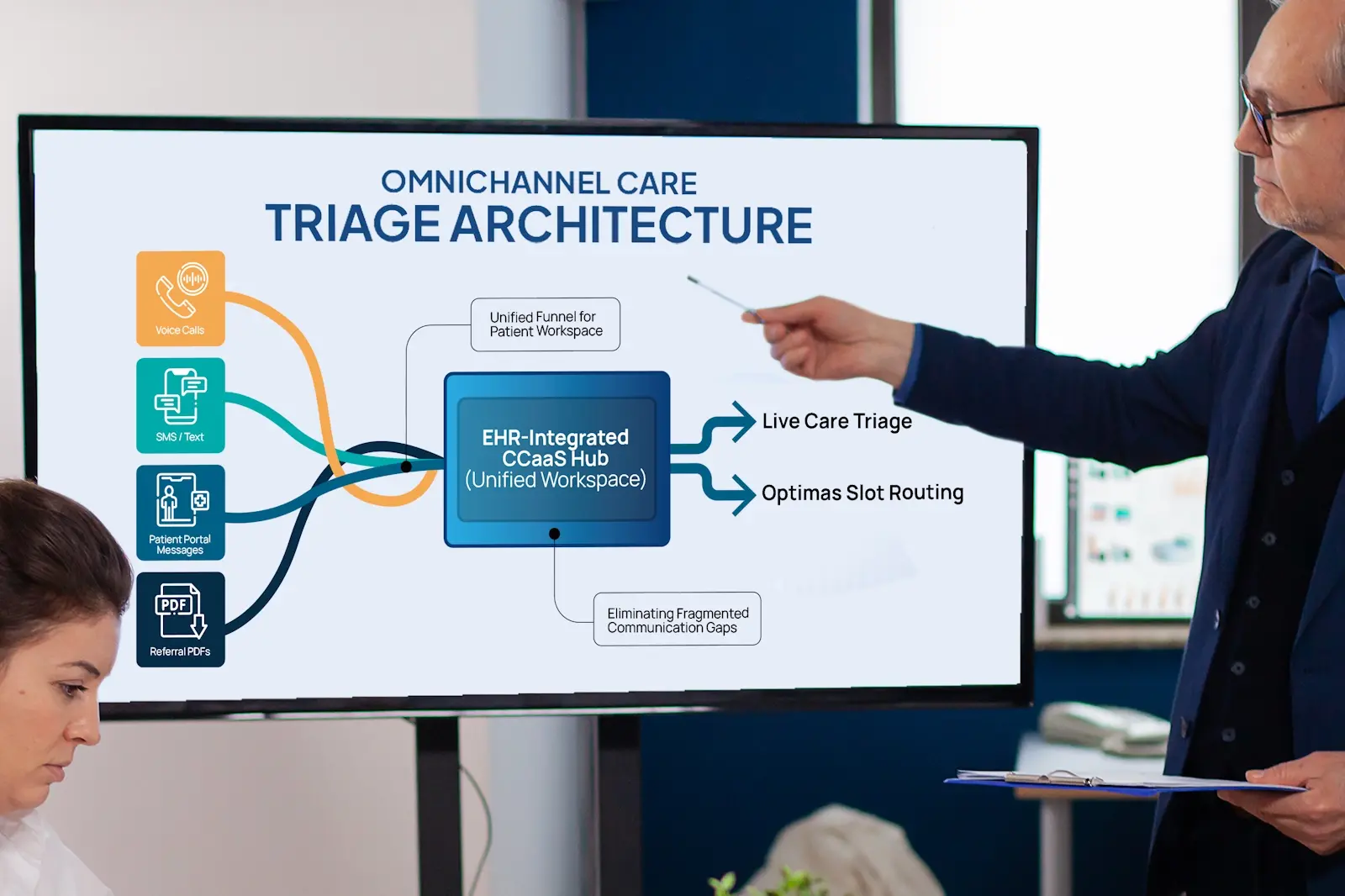
Phone • Text • Portal • Telehealth Tech Support ──> EHR-Integrated CCaaS ──> Live Care Triage & Optimal Slot Routing
By utilizing deep Electronic Health Record (EHR) integrations and advanced routing systems, a specialized care traffic control hub manages multiple complex touchpoints simultaneously:
- Patient Portal Triage: Actively managing secure messaging queues, processing prescription renewal requests, and sorting inbound patient messages so that clinical nurse boxes remain completely clear of non-urgent administrative noise.
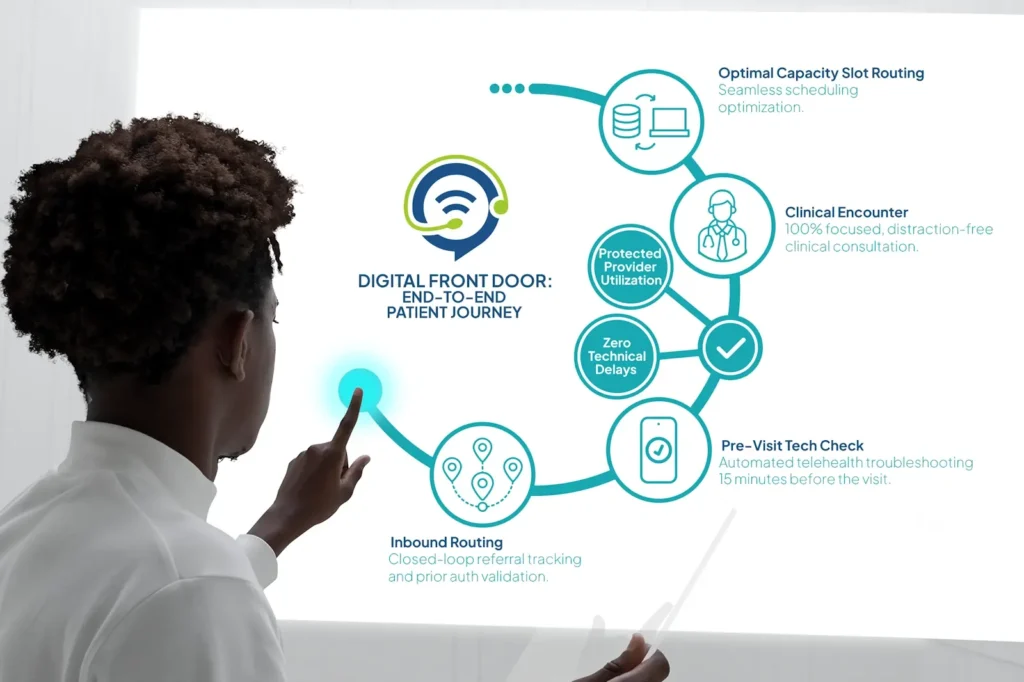
- Telehealth Troubleshooting: Acting as a first-line digital technical support desk. Agents run automated connectivity checks with patients 15 minutes before their virtual visits, eliminating technical delays and protecting provider utilization rates.
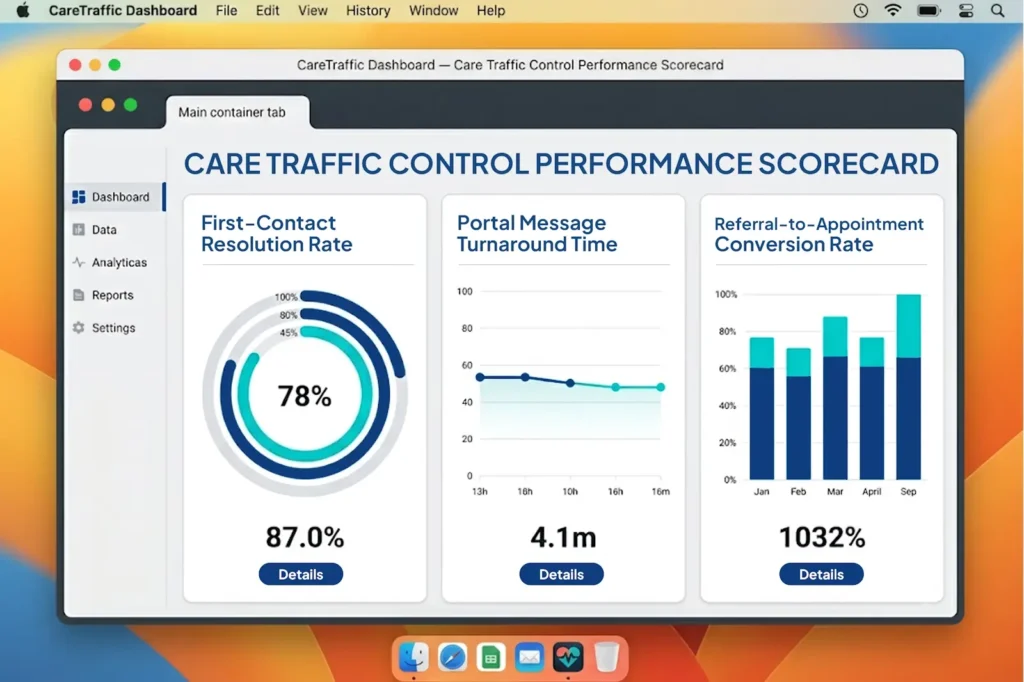
- Closed-Loop Referral Tracking: Actively managing inbound and outbound specialist referrals. Schedulers track data transfers, secure prior authorization records, and reach out to patients proactively to turn a raw referral into a fully confirmed appointment.
Driving Efficiency and Clinical Alignment
Shifting an organization toward a Care Traffic Control framework requires balancing scalable technology with disciplined execution. It means replacing uncoordinated daily tasks with a structured capacity management engine. When a medical group utilizes an optimized, EHR-integrated access architecture, the improvements are felt across the entire organization:
1. Standardized Scheduling Logic
Schedulers operate on precise, rule-based algorithms that define exact criteria for every appointment type, insurance verification step, and clinical escalation trigger. This structural alignment cuts down scheduling errors and maximizes first-contact resolution rates.
2. Proactive Capacity Management
Instead of just waiting for the phone to ring, care navigators actively monitor provider schedules to spot open slots, match high-complexity patients with appropriate appointment times, and minimize no-show risks through easy, interactive digital touchpoints.
3. Multilingual Care Integration
Recognizing that healthcare delivery is highly personal, a modern access hub integrates native bilingual support across all communication channels. This integration eliminates language barriers, builds patient trust, and ensures consistent care access across diverse patient populations.
Shifting From a Cost Center to a Competitive Advantage
In modern healthcare operations, patient access should never be treated as an isolated administrative task. The call center is often the very first interaction a patient has with your brand; if that experience is slow, rigid, and restricted to old phone networks, it creates immediate dissatisfaction and drives away patients.
By upgrading your front-door operations into a centralized Care Traffic Control hub, you replace administrative bottlenecks with a highly responsive, omnichannel engagement network. This shift protects your clinical staff from burnout, keeps your provider calendars optimally filled, and delivers the frictionless, high-quality experience today’s patients demand.
To evaluate how your healthcare organization can transition its legacy call center into an integrated Care Traffic Control engine that maximizes provider capacity and enhances the patient experience, contact us today to schedule an operational assessment with our Management Team.