October is Breast Cancer Awareness Month. In observance, we dedicate this blog to advancing awareness, early detection, and equitable access to breast cancer services, starting with closing screening gaps.
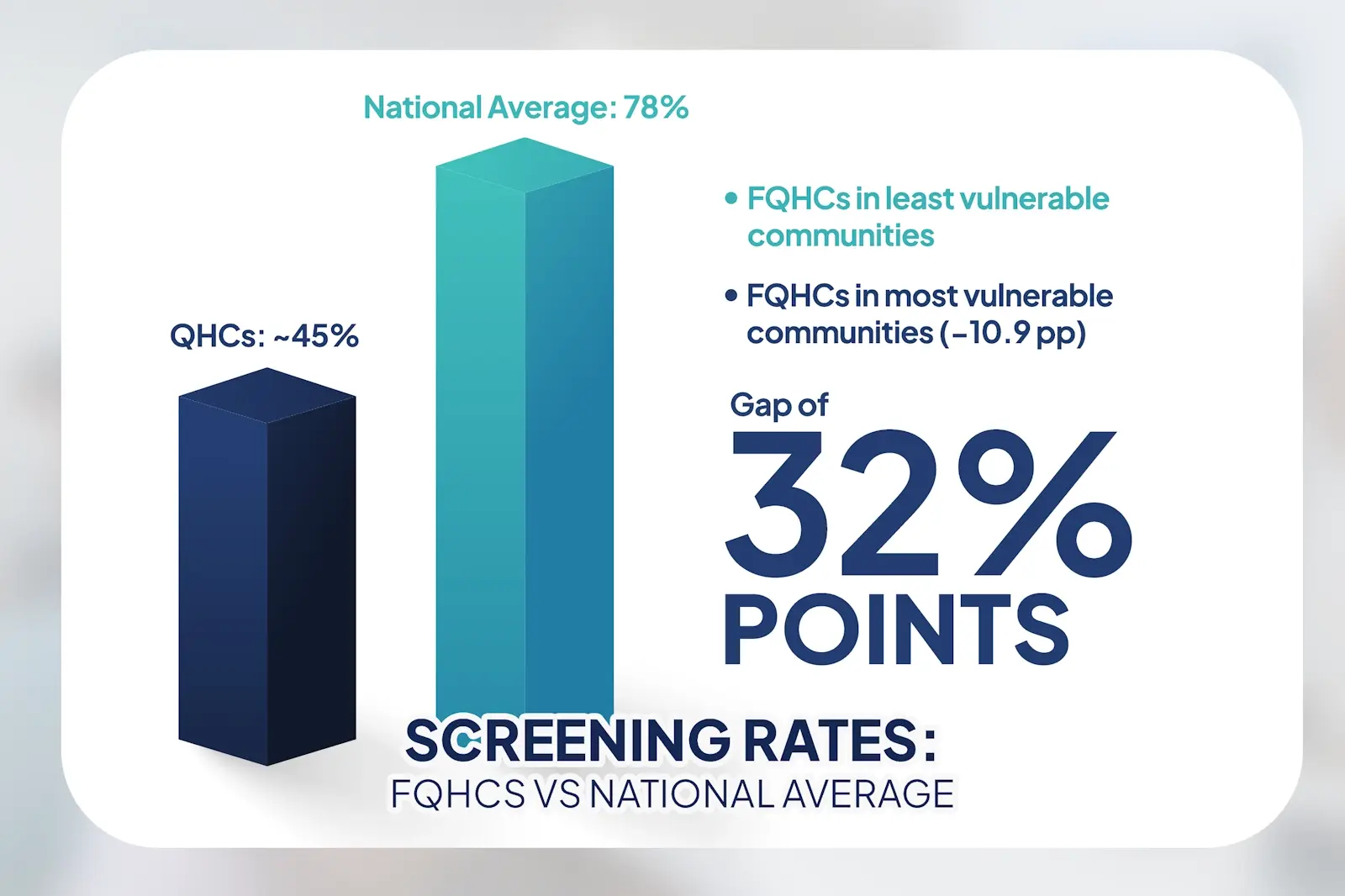
In 2026, breast cancer screening rates in Federally Qualified Health Centers (FQHCs) sit at around 45%, roughly 32 points below the national average (78%). And the gap is even wider within the FQHC network itself: centers serving the most socially vulnerable neighborhoods have breast screening rates that are 10.9 percentage points lower than those serving the least vulnerable communities.
For FQHCs, IPAs, and ACOs leaders, this can be considered an operational gap with direct implications for quality metrics, HEDIS performance, patient outcomes, and financial sustainability.
Early Detection Matters
A JAMA study estimating cancer deaths averted between 1975 and 2020 found that, for breast cancer, screening was responsible for roughly 25% of the reduction in female breast cancer mortality, with therapies accounting for the remainder. Therefore, screening ensures treatment starts earlier, when it is less invasive, less costly, and more likely to succeed. For FQHC populations who face higher social risk and more barriers to care, every completed mammogram is a high‑value event that can shift diagnosis from late‑stage to early‑stage.
Where the System Breaks: Operational Bottlenecks in FQHCs
Differences in breast cancer outcomes are driven by gaps in screening access, follow‑up after abnormal results, and proper use of screening. A 2026 study published in the Journal of General Internal Medicine shows that FQHCs serving the most socially vulnerable areas have significantly lower screening rates, with the socioeconomic status subdomain of the SVI showing the strongest association.
This study highlights that FQHCs in communities marked by lower education and income, higher disability, more single‑parent households, and limited English proficiency face greater challenges in meeting recommended screening targets.
Common operational bottlenecks include:
- English‑only, generic reminders that ignore health literacy.
- Multiple calls and confusing instructions lead to drop‑off between order and appointment.
- Patients miss appointments due to logistical barriers such as transportation, childcare, and competing needs.
- Without follow-ups after abnormal results, patients may not complete diagnostic imaging or specialist visits.
Therefore, the authors recommend enhancing outreach and patient navigation services, especially in high‑SVI areas, and aligning state cancer priorities with local barriers.
How Access‑Salud Partners with FQHCs
ACOs and FQHCs need robust systems for outreach, monitoring, and proactive intervention, but staff are often bogged down by administrative tasks. Access‑Salud provides bilingual, culturally sensitive BPO services that act as an “operations layer,” turning screening guidelines into completed mammograms without adding clinical FTEs.
We partner with FQHCs through:
- Preferred‑language contact, culturally competent scripts, and empathetic communication that improve trust and appointment keeping.
- Clear explanations, help choosing imaging sites, transport coordination, and result tracking; navigation has been shown to increase breast and cervical cancer screening by ~13.8 percentage points.
- Reminder cadences, appointment confirmation, and proactive rescheduling to convert no‑shows into completed visits.
- Due/overdue lists, segmentation by language and risk, targeted outreach, and continuous improvement via QAPI, supported by a nearshore model with time zone alignment and cost‑effective, skilled bilingual professionals.
Breast cancer screening gaps in FQHCs are not inevitable; they are operational challenges that can be addressed with the right partners, processes, and cultural competence. Access Salud stands ready to be that partner.
Interested in exploring ways to strengthen screening outreach, navigation, and follow‑up in your organization? Schedule a conversation with one of our founders.