The “Fourth Trimester” Disconnect
In the landscape of 2026 healthcare, the “Fourth Trimester” (the 12 weeks following childbirth) remains one of the most vulnerable periods for both mother and infant.
While prenatal care is often rigorous and structured, the transition from hospital discharge to home often feels like being “discharged to nowhere”, and for many mothers, particularly those in underserved or marginalized communities, this gap becomes a clinical risk.
A significant portion of maternal morbidity occurs in the weeks following delivery, often due to unmanaged hypertension, infection, or mental health crises. At Access-Salud, we believe that achieving Maternal Health Equity requires more than just better software.

The Disconnect in Discharge
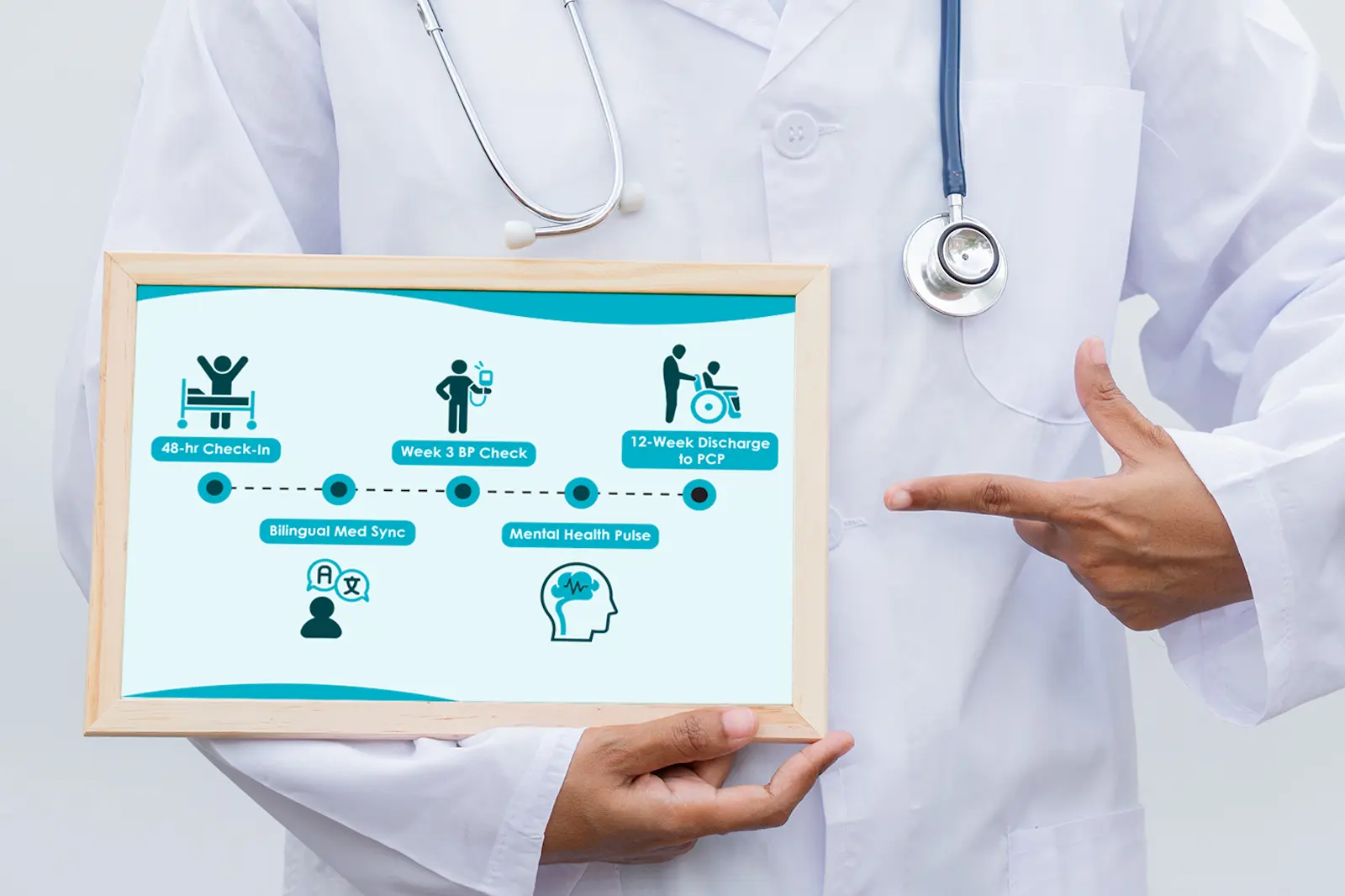
Traditional postpartum models rely on the patient to navigate their own recovery. They are expected to manage complex follow-up schedules, monitor their own clinical warning signs, and overcome social determinants of health (SDOH). All while caring for a newborn.
When the system is passive, the most vulnerable patients fall through the cracks and administrative friction becomes a life-threatening barrier.
If a clinic’s domestic team is overwhelmed by the sheer volume of scheduling and data entry, they cannot proactively reach out to a mother who missed her two-week blood pressure check. Equity is lost in the noise of the inbox.

Navigation as a Life-Saving Engine
Access-Salud bridges this gap with clinically trained nearshore navigators to act as the “Burnout Buffer” for your domestic OB/GYN teams, absorbing the high-friction tasks that usually stall patient momentum.
Protecting the Human Engine of your organization means ensuring your providers can focus on high-acuity clinical care while we manage the complex administrative web of postpartum recovery.
By absorbing these necessary but time-consuming workflows, we help your administration become burnout-resistant and your patients become truly seen.
Maternal health equity isn’t just a goal: it’s an operational standard. By reallocating resources to a nearshore-lean navigation model, healthcare leaders can stabilize their margins while significantly improving clinical outcomes for the mothers who need them most.
Schedule a strategic consultation with our Management Team today to audit your postpartum care pathways and begin building a more equitable, resilient engine for 2026.