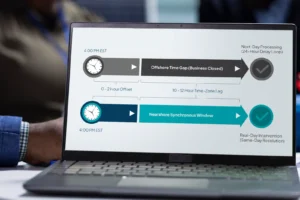
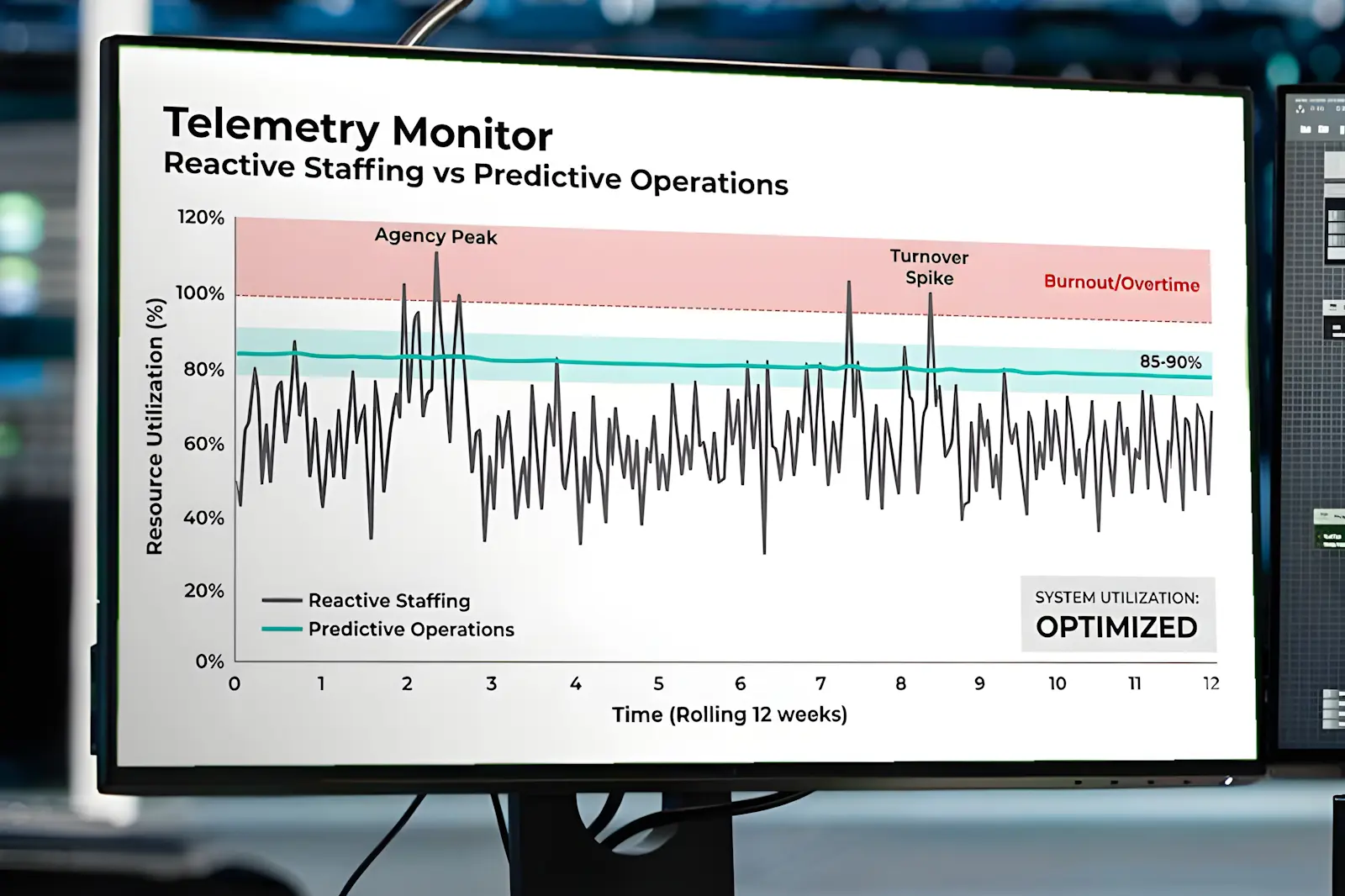
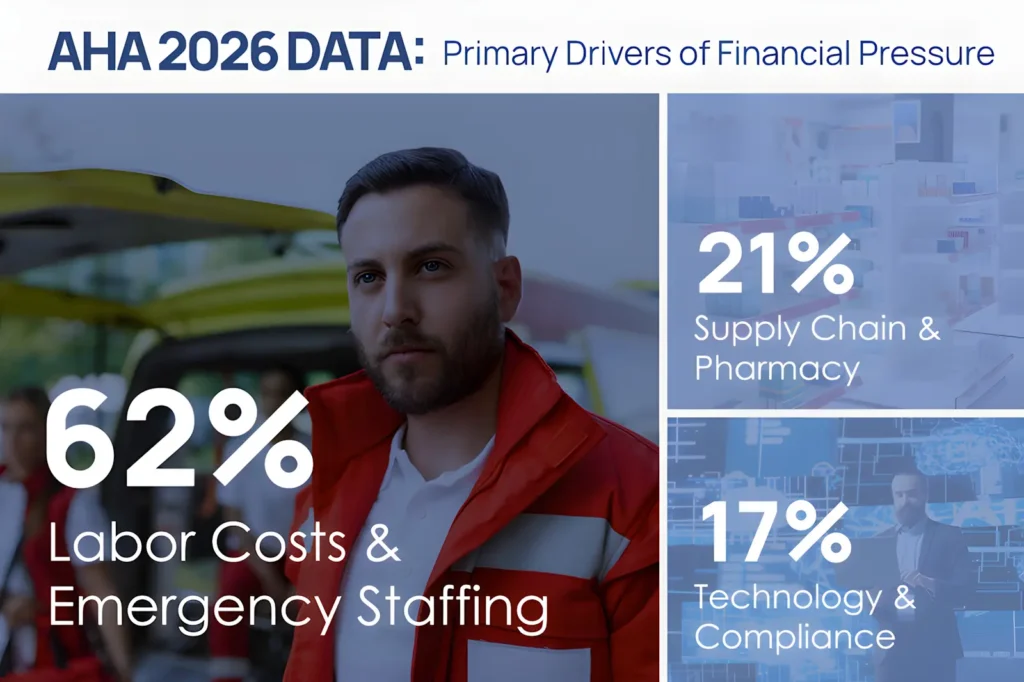
For too long, healthcare staffing has functioned in a state of “Reactive Gravity”: When patient volume surges or staff turnover spikes, organizations react by leaning on high-cost traveling agencies, excessive overtime, and emergency recruitment. According to the American Hospital Association (AHA), the “Costs of Caring” have continued to surge, with labor expenses remaining the single largest driver of financial pressure on hospitals and large practices.
This reactive cycle is not just a financial drain; it is the primary catalyst for systemic burnout. When staffing is reactive, the burden falls on the existing team to bridge the gap, leading to a “system under pressure” that is increasingly poised for a total reinvention of how work is managed.
Predictive Operations
To protect the workforce, leadership must move toward Predictive Operations. This involves using data to forecast patient demand and staffing needs weeks in advance. Research highlights that predictive modeling allows organizations to align capacity with forecasted demand, effectively targeting the “operational roots” of exhaustion before they result in staff departures.
Predictive operations do not just manage numbers; they manage energy. By identifying upcoming “high-friction” periods, organizations can proactively deploy support, ensuring that the domestic team is never pushed to a breaking point.
The Rise of Agentic AI and the “Digital Coworker”
As we look toward 2026, the role of Large Language Models (LLMs) is shifting from simple chatbots to “Agentic AI”: autonomous agents capable of coordinating complex administrative tasks.
McKinsey’s latest tech trends indicate that healthcare is currently caught between the “promise and perils” of AI; the promise lies in AI’s ability to act as a digital coworker that handles the repetitive, high-volume tasks that currently overwhelm human staff.
However, for Agentic AI to work, it cannot operate in a vacuum. It requires a sophisticated operational framework to ensure it supports, rather than replaces, the human element. When AI is used to handle revenue cycle management or complex scheduling, it acts as a protective shield, allowing the human workforce to focus on the high-value, empathetic care that technology cannot replicate.
Institutional Knowledge, the Fuel for AI
A common pitfall in the rush to automate is the “Knowledge Gap.” AI and predictive models are only as effective as the data and context they are fed. This is where your long-serving veterans become your most valuable strategic asset.
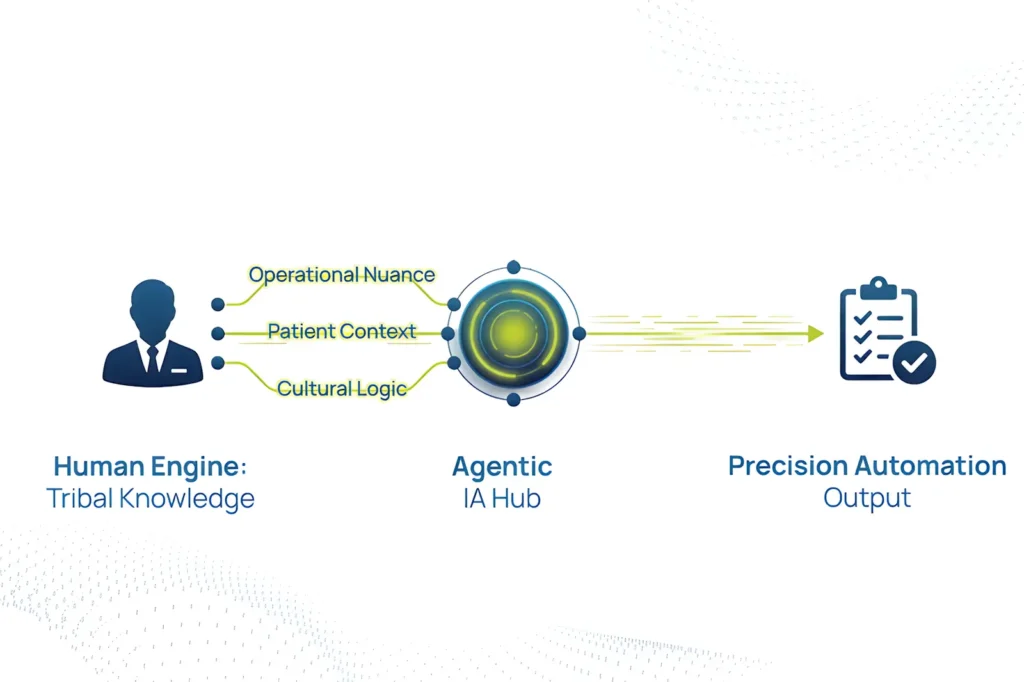
Veteran staff hold “Institutional Knowledge” (or Tribal Knowledge)—the tacit understanding of how an organization truly functions, its cultural nuances, and its unique patient needs. Without this context, AI implementations risk making errors that alienate patients or create new administrative burdens.
Protecting your team means specifically protecting these veterans. By using predictive operations to reduce their daily “clutter” tasks, you ensure their institutional wisdom remains within the organization to ground and guide your new digital systems. A strategy that values knowledge management as a core competency ensures that LLMs have the high-quality, organizational-specific context they need to operate efficiently.
Reinventing the Workforce for 2026
The end of reactive staffing is a transition from surviving to thriving. By integrating predictive analytics with the emerging capabilities of Agentic AI, healthcare organizations can create a stable environment that protects their most important resource: their people.
When we protect the team through better operations, we aren’t just saving on labor costs; we are preserving the human heart of healthcare.