
The Disappearing Perimeter of Modern Healthcare
Modern healthcare operations no longer exist entirely within the physical walls of a clinic or hospital network. The pressure to scale administrative capacity, accelerate bilingual patient intake, and streamline complex billing workflows has decentralized operations across a distributed ecosystem of specialized service providers. While this model unlocks vital operational leverage, it fundamentally dissolves the traditional organizational perimeter.
When external partners handle patient interactions, verify insurance coverage, and manage sensitive health records, any vulnerability in their infrastructure becomes an immediate vulnerability for the host health system. Regulatory oversight reflects this reality: federal data confirms that external business associates represent one of the most prominent vectors for systemic data exposure and privacy compromises across the healthcare sector. Protecting patient trust requires moving beyond surface-level vendor questionnaires and implementing rigorous, ongoing operational audits.
Technical Rigor: Scrutinizing Data Isolation and Zero Trust
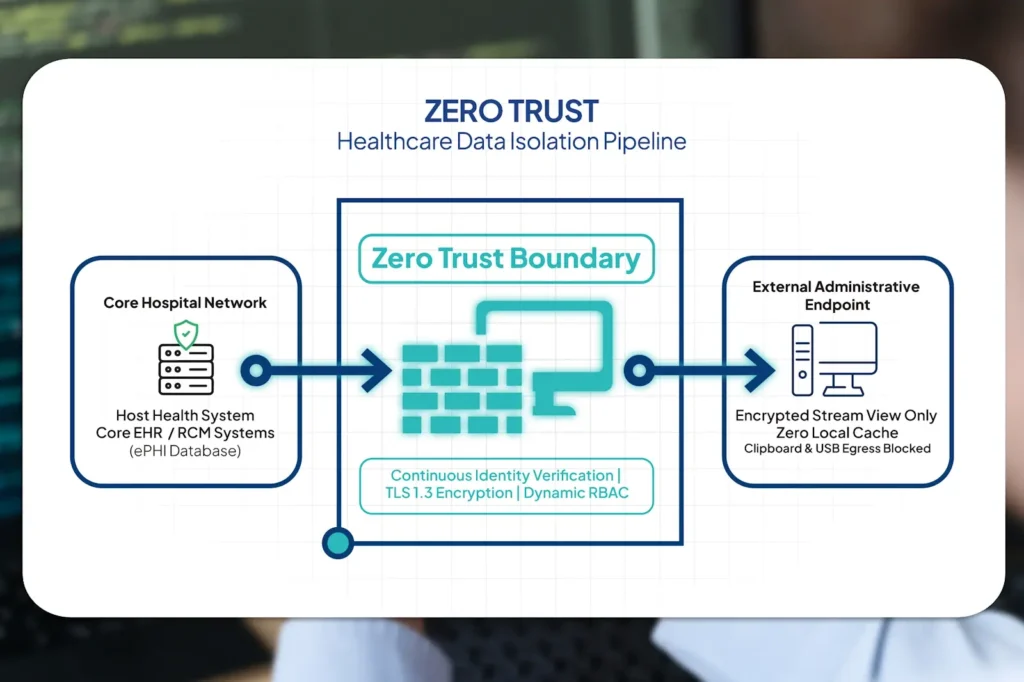
Evaluating an external partner’s technical posture requires looking past standard non-disclosure agreements and static compliance certificates. A mature vendor must demonstrate active, verifiable safeguards that govern how electronic protected health information (ePHI) is accessed, viewed, and isolated.
Health systems must mandate strict architectural controls, including granular role-based access control (RBAC), multi-factor authentication across all operational endpoints, and robust endpoint security. Operating on verified Zero Trust security frameworks for ePHI ensures that external administrative teams only access the discrete patient records necessary to execute their assigned tasks, eliminating broad network exposure. Aligning these technical audits with formal standards, such as the cyber supply chain risk management guidelines established by the National Institute of Standards and Technology, creates an uncompromised defensive baseline.
Operational Resilience: Evaluating Stability Beyond the Contract
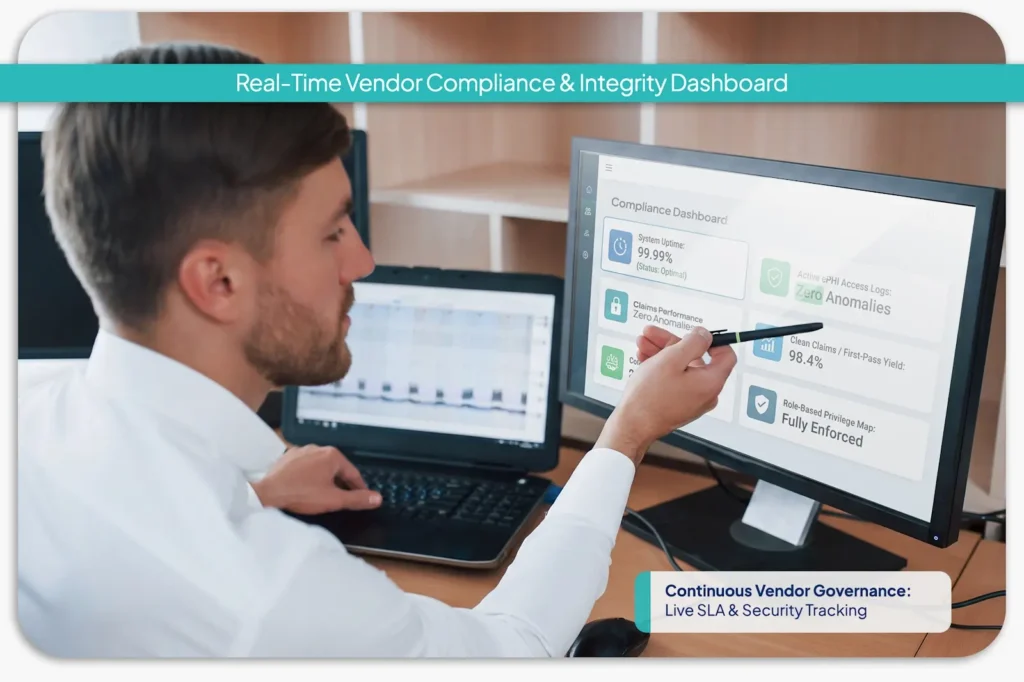
Security is only half of the risk equation; operational fragility poses an equal threat to clinical continuity and financial performance. A partner experiencing high employee turnover, fragile IT redundancy, or ad-hoc process governance will inevitably generate high error rates, delayed prior authorizations, and dropped patient inquiries.
When front-line administrative operations falter, the resulting claim denials and patient attrition quickly eclipse any anticipated cost savings. Factoring in the broader financial impact of operational vendor failure makes it clear that talent retention, thorough standard operating procedures (SOPs), and physical infrastructure redundancy are essential pillars of risk mitigation.
Standardizing the Audit: A Practical Evaluation Framework
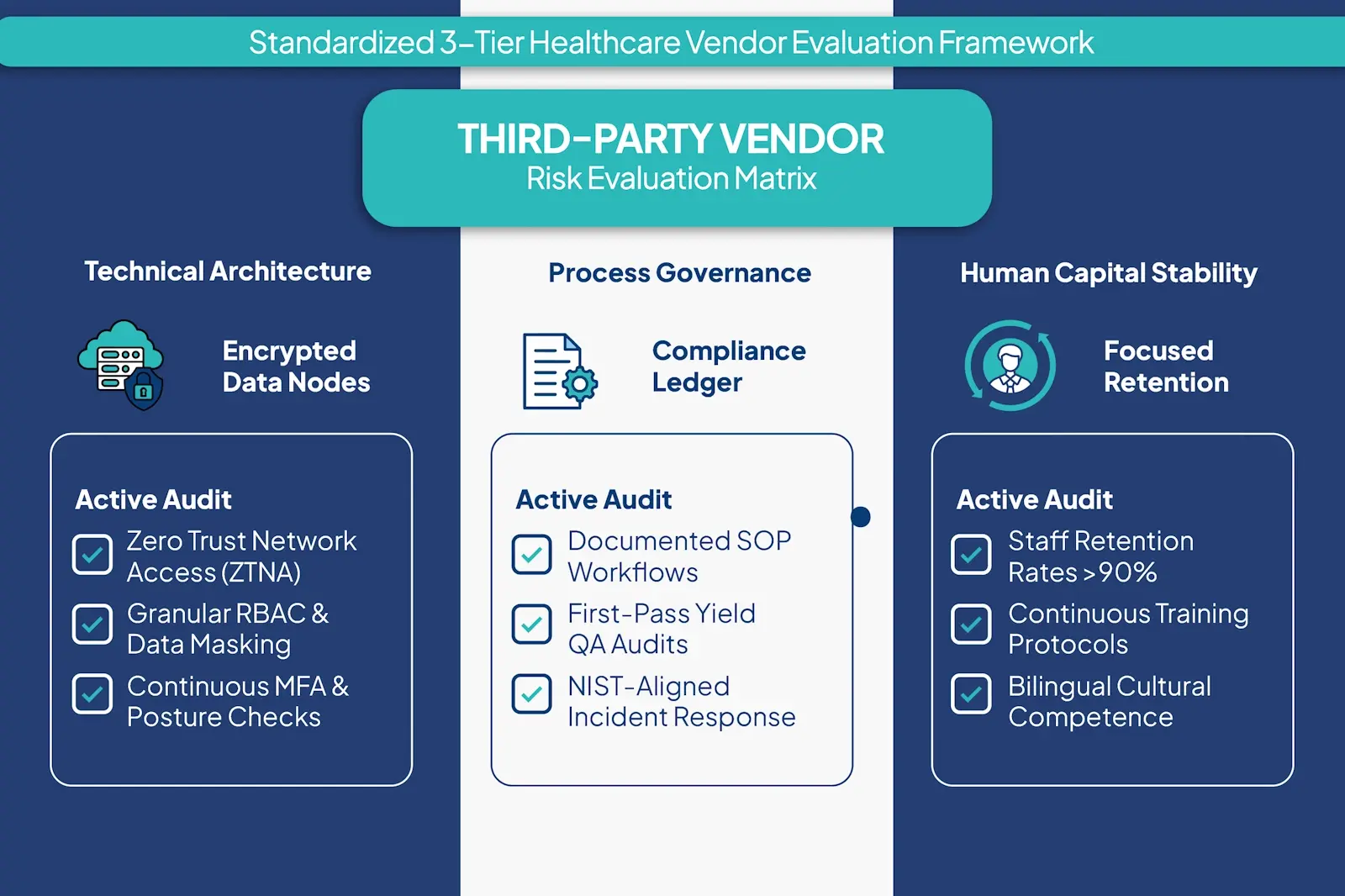
To maintain consistency across external partnerships, health systems must replace subjective vendor reviews with a standardized, objective evaluation methodology. Auditing an external partner should examine three distinct layers: architectural security, regulatory governance, and human capital stability.
Operational Resource: To help leadership teams systematically evaluate prospective or existing service partners, we consolidated our internal risk management protocols into an actionable tool. You can download the Healthcare Third-Party Vendor Audit Checklist to evaluate prospective partners across 24 critical operational, legal, and technical security vectors before signing a service agreement.
Building Partnerships Grounded in Radical Transparency
Sustainable growth in healthcare administration relies on partnerships built on accountability, continuous verification, and operational maturity. When an organization holds its external partners to the highest standards of data isolation and workflow governance, outsourcing transforms from an operational gamble into a secure catalyst for patient acquisition and care delivery.
To benchmark your existing administrative workflows or schedule an operational security review with our compliance leadership, connect with the Access-Salud team today.