In high-velocity healthcare administrative operations, precision is non-negotiable. Whether analyzing complex revenue cycle data, verifying prior authorization codes, or navigating clinical triage, back-office specialists process hundreds of critical decision points daily. While traditional management frameworks focus strictly on time management, modern operational science reveals a deeper bottleneck: cognitive fatigue.
Sustaining high operational accuracy requires moving beyond time tracking to embrace energy mapping. By understanding the neurobiology of sleep, circadian rhythms, and cognitive load, healthcare professionals can structure their daily workflows to maximize focus, eliminate costly administrative rework, and protect long-term mental well-being.
The Neurobiology of Operational Accuracy
Operational accuracy in healthcare support depends heavily on the brain’s prefrontal cortex—the region responsible for executive function, working memory, pattern recognition, and decision-making speed. When cognitive resources are depleted, the brain shifts from proactive processing to reactive survival strategies, dramatically increasing susceptibility to human error.
Sleep is the biological mechanism that clears metabolic waste from the brain and consolidates procedural memory. When sleep duration drops below optimal thresholds, the impact on complex administrative workflows is immediate:
- Degraded Working Memory: Sleep-deprived specialists struggle to retain complex multi-step instructions, leading to missed variables in claims coding and patient documentation.
- Micro-Lapses in Attention: Involuntary cognitive “microsleeps”—brief lapses in attention lasting from 500 milliseconds to several seconds—frequently occur during repetitive or detailed tasks, directly driving data entry errors.
- Compensatory Burnout: Attempting to force focus through high cognitive fatigue requires exponential effort, accelerating burnout and physical exhaustion.
Quantifying Sleep Debt: The Technical Data
The operational cost of sleep deprivation is a quantifiable physiological reality:
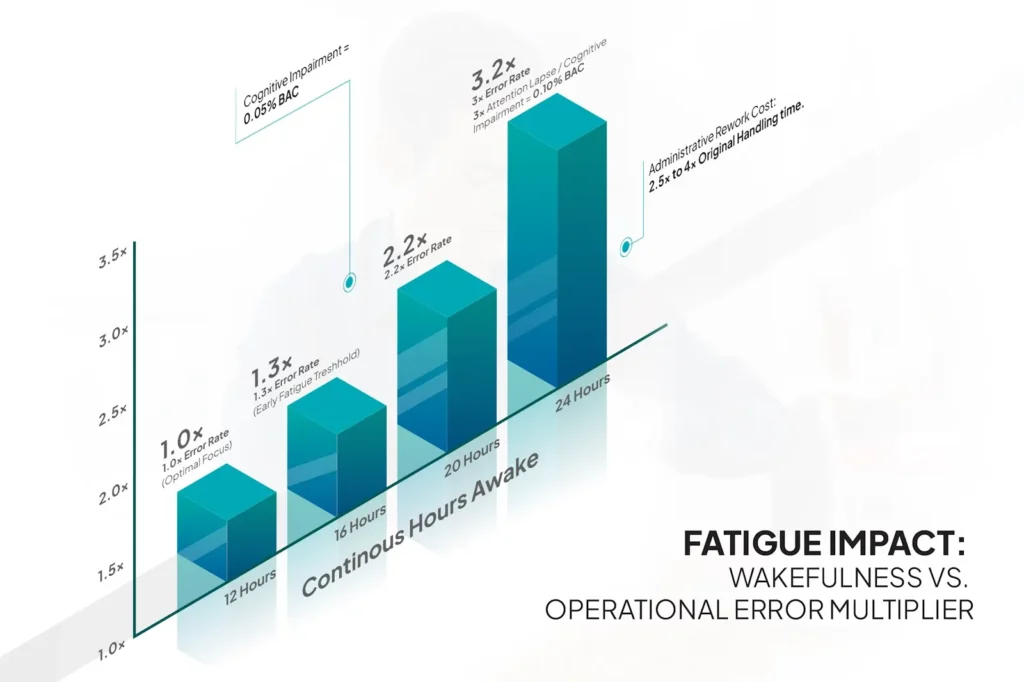
- Impairment Equivalent to Alcohol Intoxication: Extensive research published in Occupational and Environmental Medicine demonstrates that 17 to 19 hours of continuous wakefulness degrades cognitive speed and hand-eye coordination to a level equivalent to a Blood Alcohol Concentration (BAC) of 0.05%. Extending wakefulness to 24 hours pushes cognitive impairment to the equivalent of 0.10% BAC—well past legal intoxication limits.
- Tripled Error Rates: Sleep restriction studies by Harvard Medical School’s Division of Sleep Medicine show that individuals getting less than 6 hours of sleep per night for two consecutive weeks exhibit a 3x increase in attention lapses and operational error frequency compared to well-rested peers.
- The Hidden Sunk Cost of Rework: In administrative healthcare operations, a single data entry error caused by fatigue often requires 2.5 to 4 times the original handling time to audit, appeal, and correct down the line.
Energy Mapping: Aligning Workflow with Cognitive Peaks
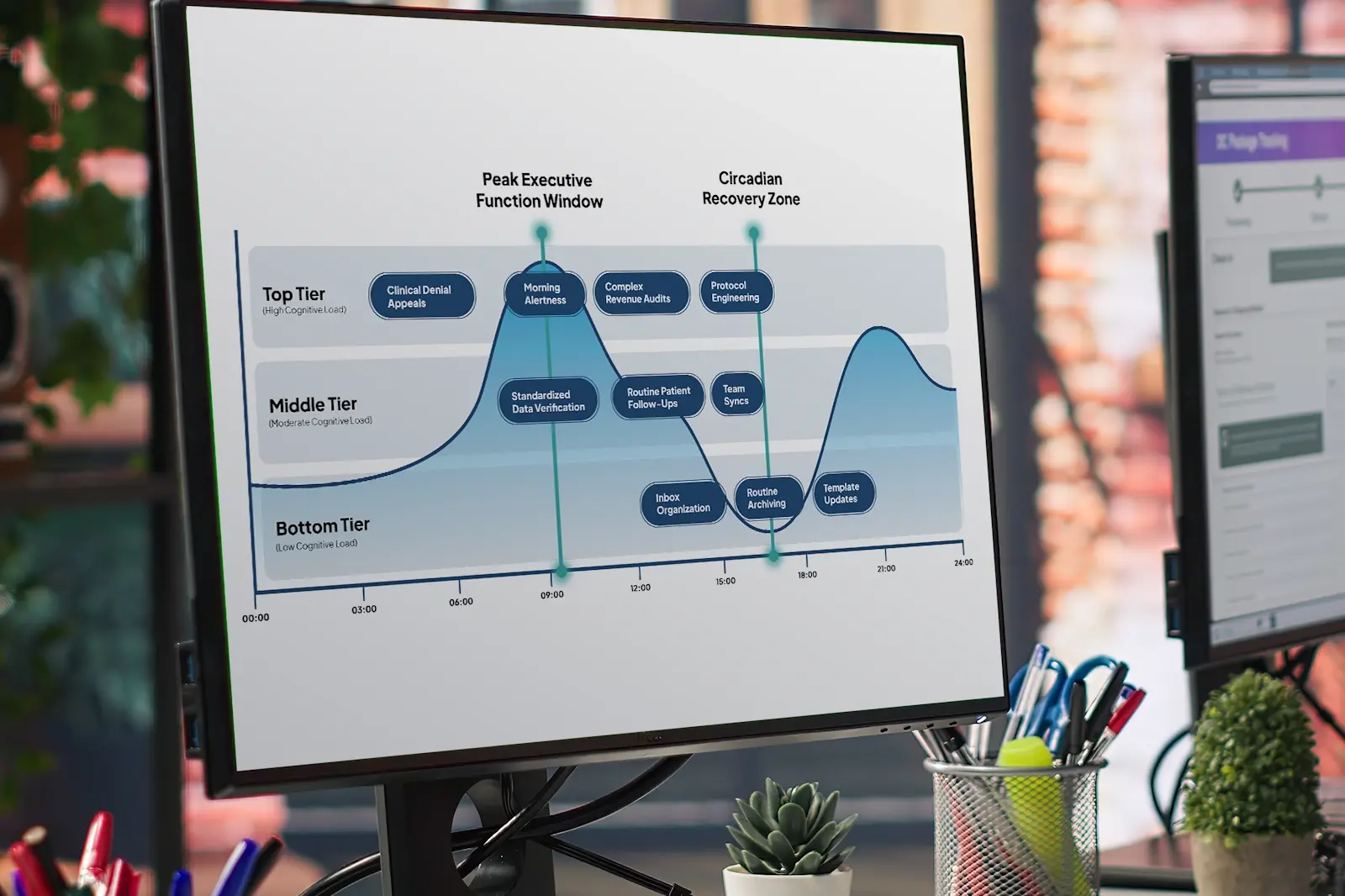
To mitigate the impact of cognitive fatigue, teams can deploy Energy Mapping—a structured approach that categorizes daily tasks based on cognitive complexity and aligns them with natural circadian energy peaks.
Instead of tackling tasks sequentially as they enter an inbox, energy mapping segments work into three distinct operational tiers:
- Tier 1: High Cognitive Load (Peak Energy Windows): Tasks requiring deep analytical reasoning, clinical denial appeals, complex revenue auditing, and protocol development. These are scheduled during peak morning alertness windows (typically 2–3 hours after waking).
- Tier 2: Moderate Cognitive Load (Maintenance Windows): Standardized data verification, routine patient follow-ups, and structured team syncs. Executed during mid-day steady-state energy periods.
- Tier 3: Low Cognitive Load (Low Energy / Recovery Windows): Administrative inbox organization, routine archiving, and standard template updates. Reserved for natural circadian dip periods (e.g., post-prandial afternoon lulls).
Sustainable Performance as an Operational Discipline
At Access-Salud, employee well-being and operational excellence are deeply intertwined. Protecting the cognitive health of our specialists is not merely a wellness initiative; it is a fundamental pillar of our operational discipline.
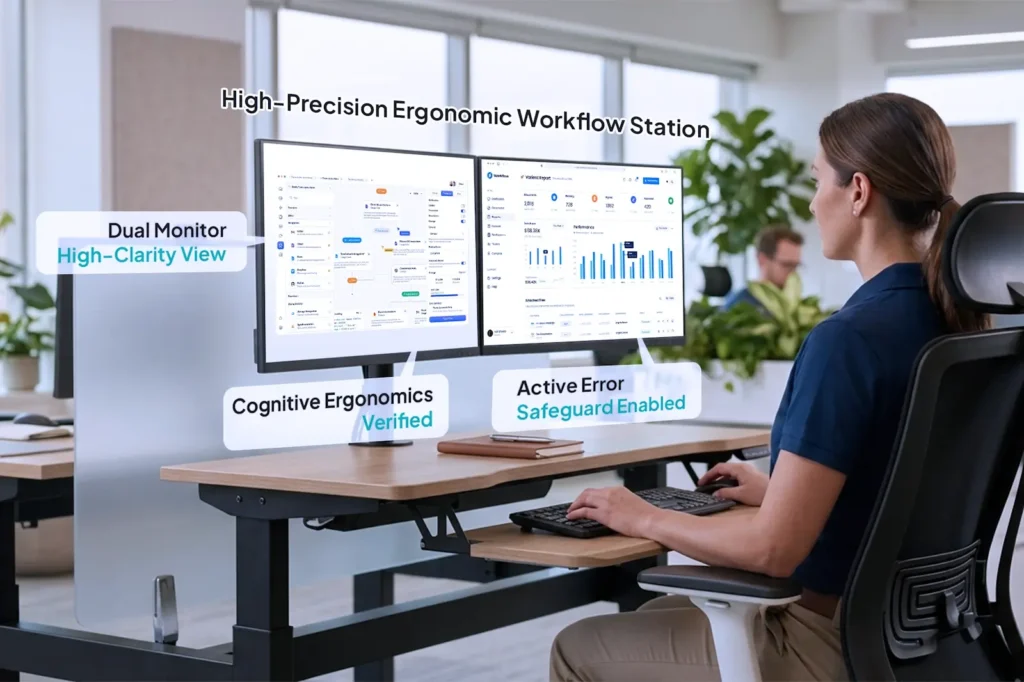
By providing our teams with the tools, ergonomics, and workflow frameworks necessary to manage cognitive load, we foster a resilient work environment. When professionals are empowered to align their work with peak cognitive energy and prioritize restorative sleep, they achieve higher accuracy, lower stress, and sustainable career growth. Operational precision is not built on continuous exhaustion—it is engineered through sustainable, high-value performance.