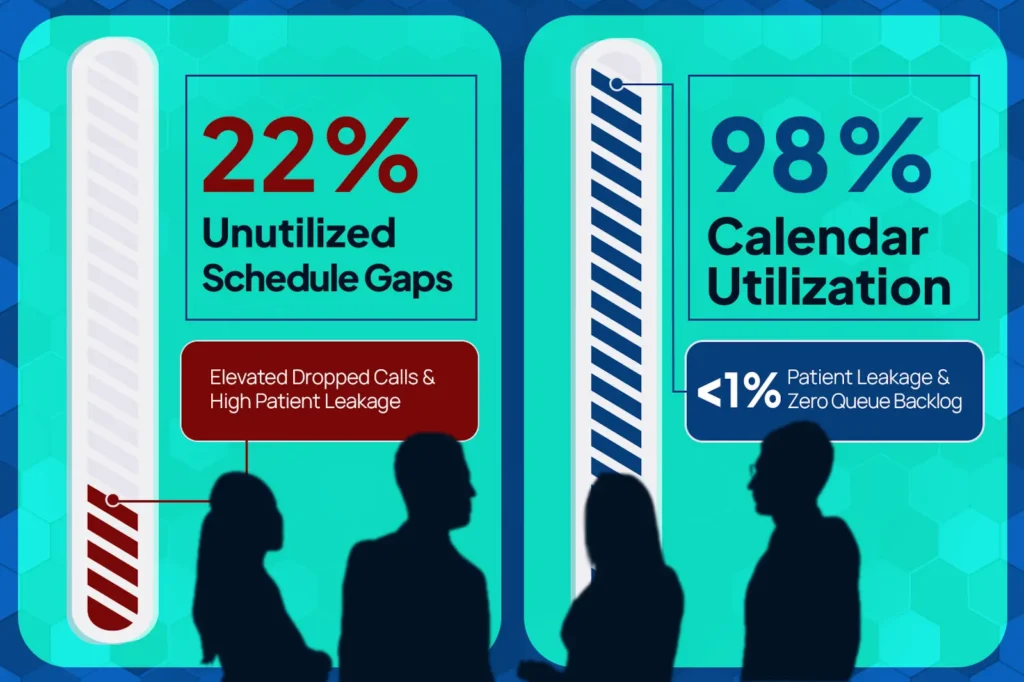
In multi-site medical groups and expanding clinical networks, patient acquisition is rarely the primary operational bottleneck: intake capacity is. According to industry patient access research, healthcare providers lose up to 61% of prospective patients at the scheduling step due to phone friction and delayed responses. During peak morning hours, intake channels are inundated with inbound phone calls, portal messages, referral forms, and rescheduling requests. When these entry points operate in isolated silos, the operational cost is immediate: elevated dropped-call rates, extended hold times, delayed clinical routing, and severe patient leakage.
Traditional administrative models attempt to solve this surge by simply adding more on-site reps or relying on standard medical call centers. However, data from McKinsey & Company shows that scaling a reactive, phone-first answering service fails to repair systemic structural fragmentation, leaving up to 20% to 30% of clinical calendar capacity unutilized due to poor schedule routing. To capture patient demand and protect provider schedules, healthcare leaders must transition to a unified Care Traffic Control model—an elite, omnichannel triage infrastructure that functions as a synchronized digital front door.
The Hidden Tax of Fragmented Intake
When a multi-site practice relies on site-specific front desks or disparate answering services, patient navigation degrades. A caller seeking an urgent appointment at Location A may be placed on hold while Location B has an unassigned schedule slot ten minutes away. Meanwhile, online portal inquiries and digital intake forms linger in unmonitored queues.
This fragmentation creates a double-sided financial drain. On one side, patients who encounter long hold times or delayed follow-ups frequently seek care elsewhere, representing direct revenue leakage. On the other side, clinical calendars suffer from unfilled schedule gaps, late cancellations, and improper provider-patient matching. Treating patient intake as a series of isolated administrative tasks compromises both the patient experience and provider schedule density.
Care Traffic Control: The Omnichannel Architecture
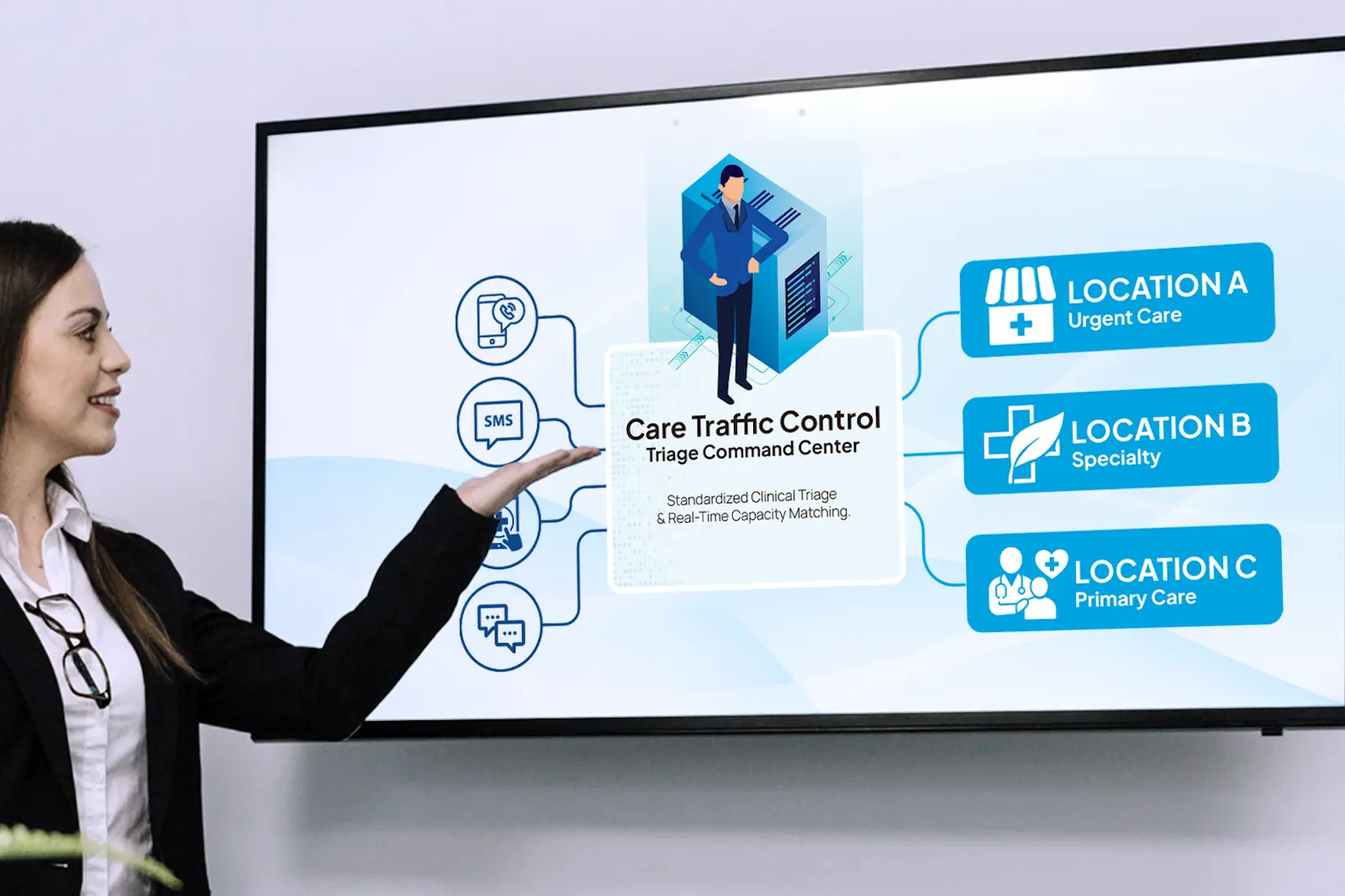
Care Traffic Control reimagines patient intake as a centralized, multi-channel triage command center. Rather than forcing every interaction through a single voice queue, a Care Traffic Control engine integrates voice, SMS, live web chat, digital intake forms, and EHR portal messages into a single, real-time operational stream.
Trained intake specialists, operating with standardized clinical routing algorithms and live schedule visibility across all clinical locations, act as care navigators. Whether a patient initiates contact via text at 7:00 AM or calls during mid-day surges, the request is immediately categorized, prioritized, and routed. This approach eliminates traditional phone bottlenecks, ensuring that every touchpoint receives immediate, contextual navigation.
Closed-Loop Patient Routing & Capacity Protection
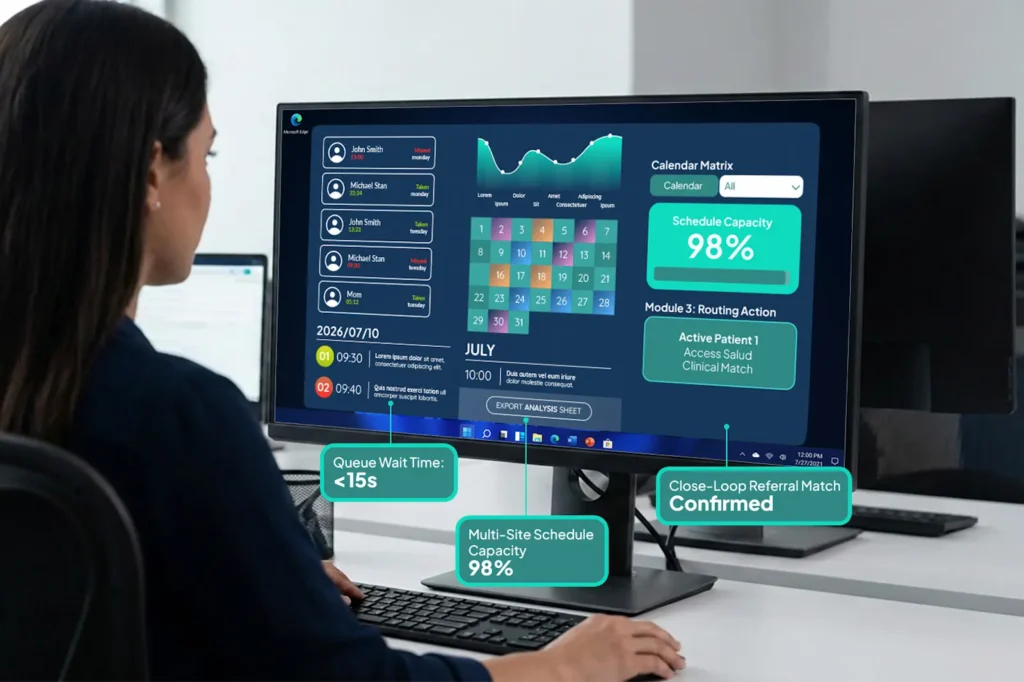
The ultimate metric of intake optimization is provider schedule efficiency. Care Traffic Control enforces closed-loop patient routing—a protocol where no intake request is marked complete until the appointment is confirmed, pre-registration data is verified, and referral documentation is linked directly to the EHR.
By centralizing schedule management, triage specialists actively balance patient loads across sites and providers. When a specialist physician encounters a last-minute cancellation, the intake engine identifies waitlisted patients and fills the open slot within minutes. This operational agility protects provider capacity, reduces no-show rates, and maximizes net revenue per clinical hour.
Engineering the Modern Digital Front Door
For healthcare executives, optimizing intake workflows is a high-ROI strategic imperative. Shifting to an integrated Care Traffic Control model transforms patient intake from a reactive friction point into a predictable growth driver.
By unifying channels, enforcing standardized routing protocols, and deploying specialized navigation teams, multi-site medical groups build an operational shield around their clinical calendars. The result is an intake engine that lowers patient acquisition costs, elevates the patient experience, and secures long-term financial health across every practice location.
To evaluate how our Care Traffic Control model can optimize your practice’s intake capacity, eliminate patient leakage, and protect provider calendars, contact us today to schedule an introductory consultation with our Management Team.