
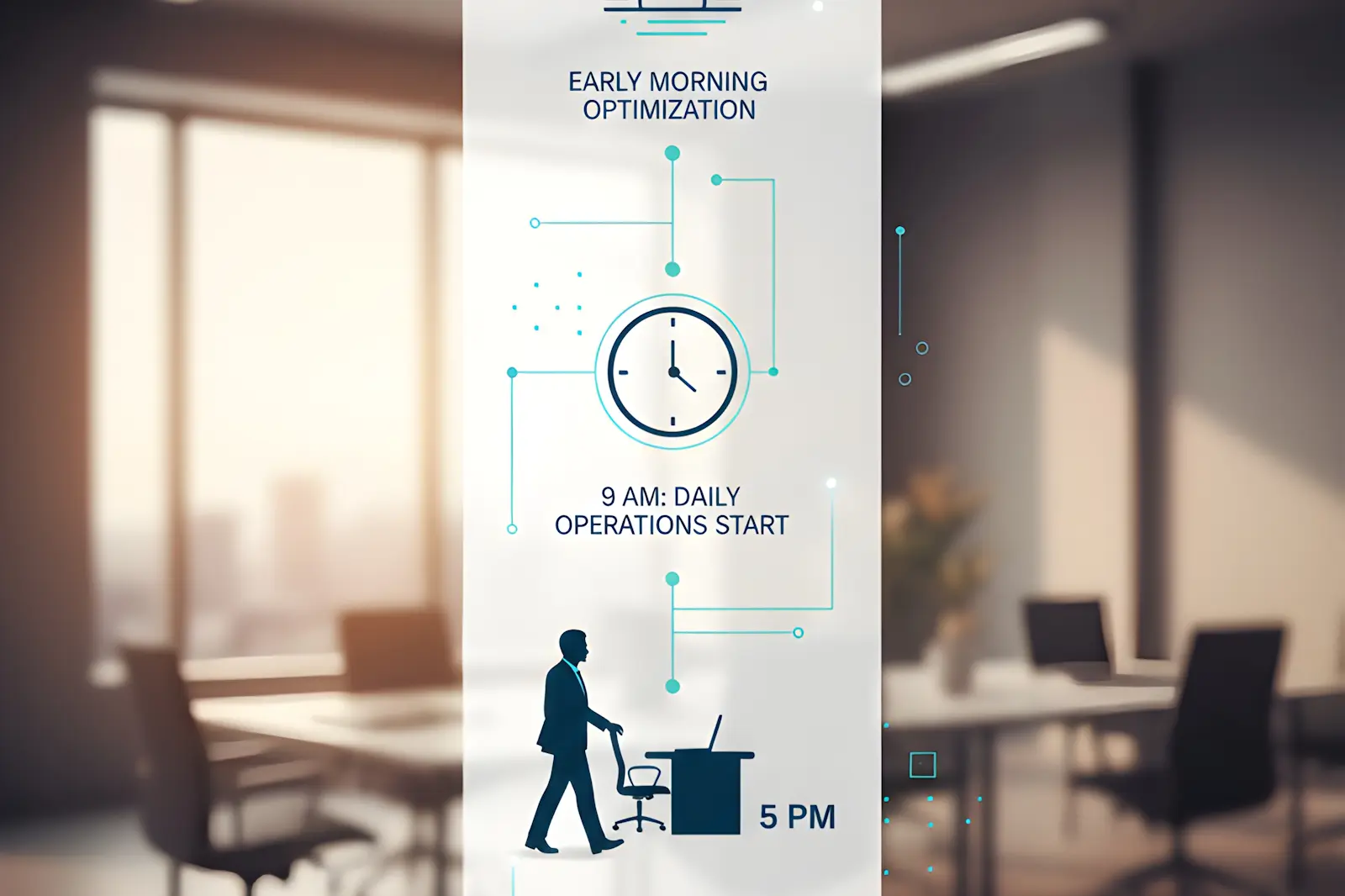
We’ve all been there: starting the day already feeling behind, reacting to every notification like it’s an emergency, and leaving the office feeling exhausted but unsure of what we actually accomplished.
Being “busy” is not the same as being “productive.” True efficiency isn’t about rushing; it’s about intentionality. By implementing a few high-impact tactical habits, you can transform your workday from a chaotic race into a structured, peaceful journey.
1. Gaining the Morning: The “Rule of 15”
A stress-free workday actually begins the night before. Decision fatigue is real; every small choice you make in the morning (what to wear, what to eat, what to pack) drains your mental energy before you even sit at your desk.
- Pre-Flight Prep: Spend 5 minutes tonight preparing for tomorrow morning.
- The Rule of 15: Aim to arrive or log in 15 minutes before your first task. This isn’t about working extra time—it’s about creating a “buffer zone.” This period allows your brain to transition into work mode, review your agenda, and start the day in a state of peace rather than panic. Punctuality is your best shield against morning cortisol spikes.
2. The Eisenhower Matrix: Urgent vs. Important
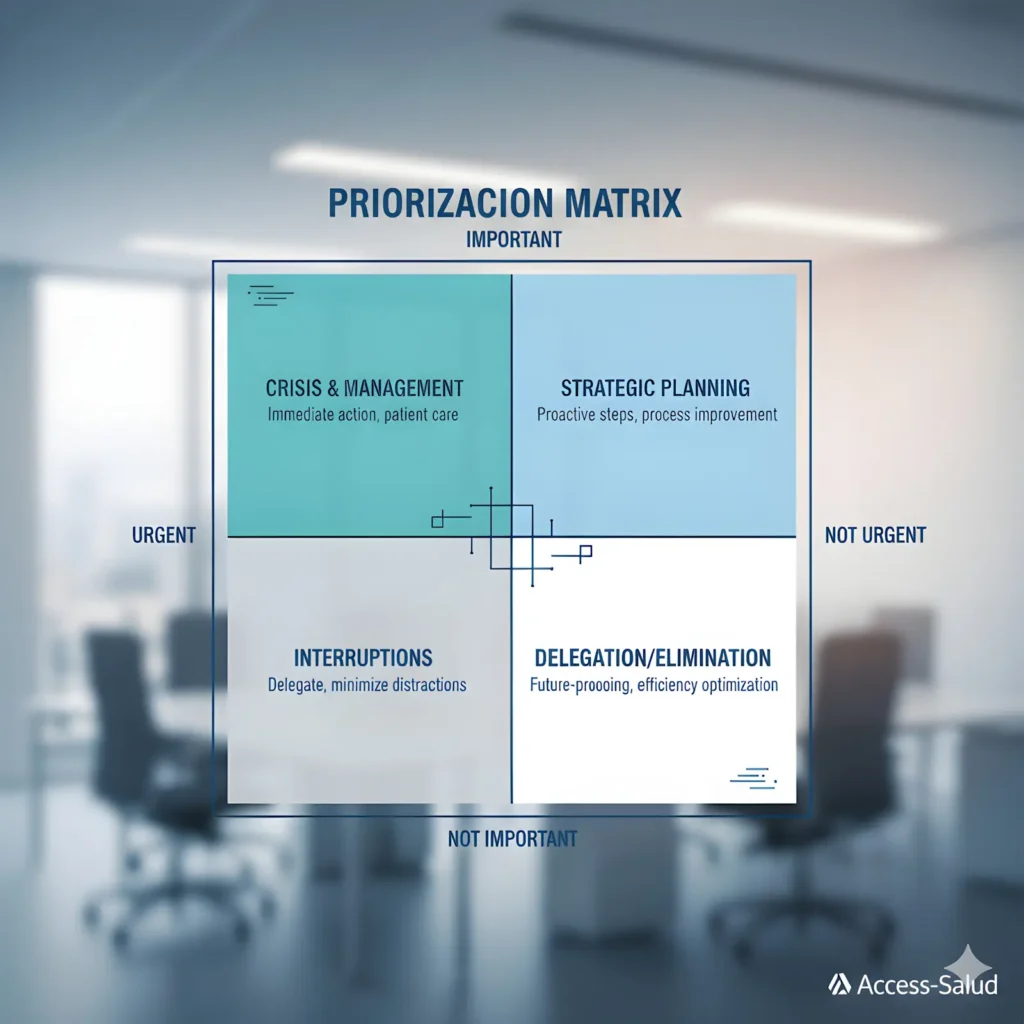
One of the greatest “time thieves” in healthcare administration is the habit of reacting to whatever is loudest. To combat this, we recommend the Eisenhower Matrix, a simple way to categorize your tasks:
- Quadrant 1 (Urgent & Important): Do these immediately (e.g., a critical patient issue).
- Quadrant 2 (Important but Not Urgent): Schedule these. This is where high-value work, like planning and professional development, happens.
- Quadrant 3 (Urgent but Not Important): Delegate or minimize these (e.g., certain interruptions or non-essential emails).
- Quadrant 4 (Neither): Eliminate these.
3. Time Blocking: Deep Work vs. Shallow Work
Multitasking is a myth that reduces your IQ by up to 10 points in the moment. Instead, try Time Blocking.
Assign specific “blocks” of time (usually 40 to 60 minutes) to a single category of task. During an “Administrative Block,” close your email and put your phone away. Protecting your “flow state” allows you to finish tasks in half the time it takes when you are constantly interrupted by notifications.
4. Closing the Loop: The 10-Minute Shutdown
How you end your day determines how you start the next. Before you log off, take 10 minutes to “close the loop”:
- The Big 3: Identify the three most important tasks for tomorrow.
- Clear the Deck: Tidy your physical or digital workspace.
- The Hard Cut-Off: When your shift ends, leave the work at the office. A disciplined exit is essential for a healthy work-life balance.
When we manage our time with intention, we don’t just work better—we live better. Follow us on our social media channels for more tips on staying focused and finding your daily flow!
Scientific Sources & References
- On Decision Fatigue:Social Psychology and Personality Science research shows that making frequent choices wears down the self-control and focus needed for high-level tasks.
- On Multitasking Myths:Stanford University researchers found that heavy multitaskers—those who multitask a lot and feel they are good at it—were actually worse at filtering out irrelevant information.
- On Buffer Zones & Stress: Research in the Journal of Applied Psychology indicates that “re-attachment” to work (the transition period in the morning) significantly impacts daily engagement and fatigue.