
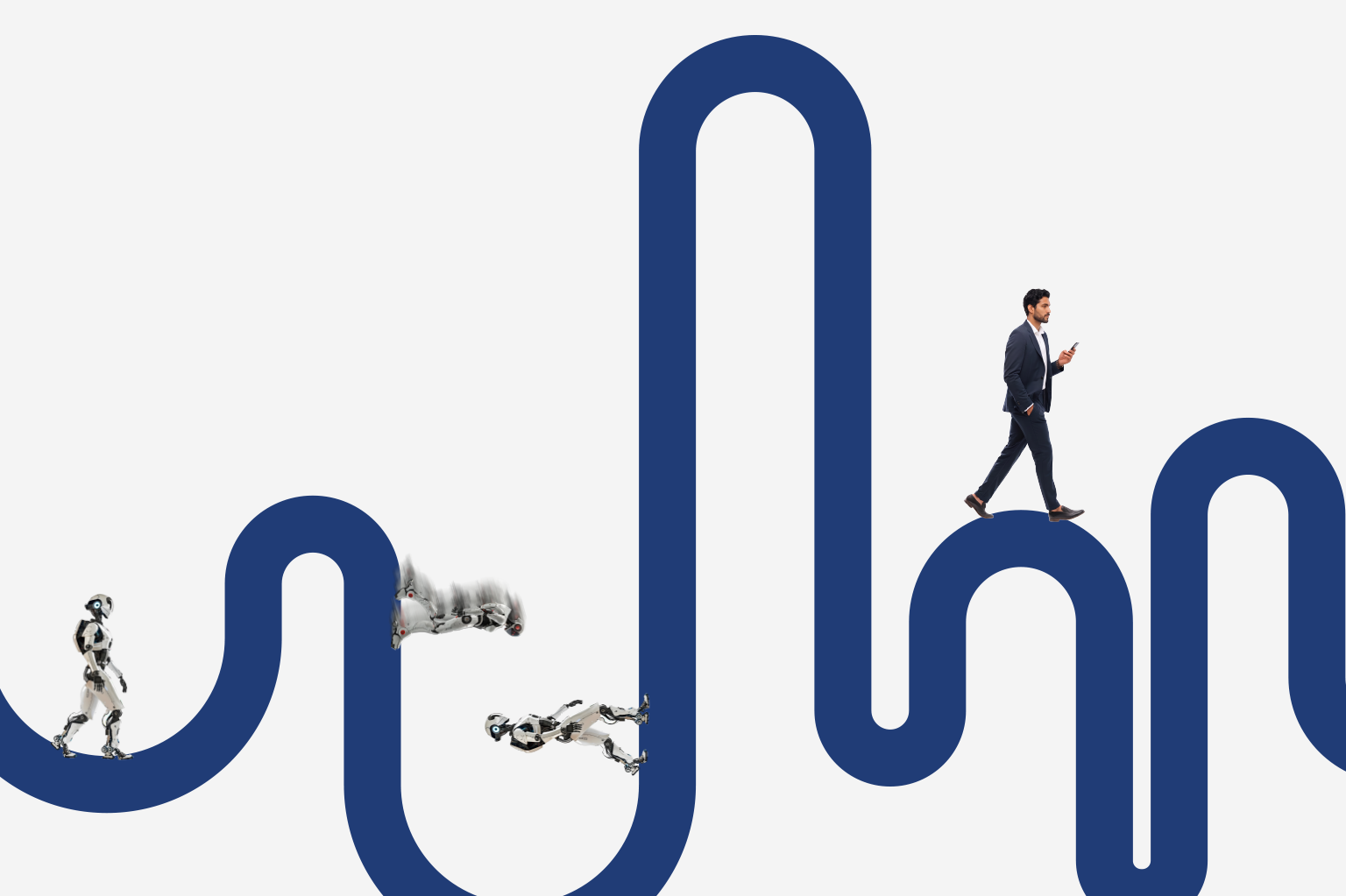
AI in Healthcare can accelerate work—but without better workflows and clear measures of success, faster processes may not translate into better outcomes.
Artificial intelligence is moving fast—it has already entered administration and care delivery. But a recent report from the Peterson Health Technology Institute (PHTI) raises an important question for healthcare leaders: Is AI in Healthcare helping solve operational problems, or simply helping the system do more of the same?
Automation can make a process faster without making it better
Healthcare organizations are exploring administrative AI for activities such as documentation, coding, prior authorization, claims review, and eligibility verification to reduce manual effort. Yet, when they are layered onto fragmented or inconsistent processes, automation can increase the speed or volume of transactions without addressing the sources of friction.
PHTI points to prior authorization as an example: automating submissions and appeals does not necessarily resolve variation in payer requirements or repeated review cycles. The broader lesson is that efficiency within one step does not automatically produce a simpler experience for patients, providers, or the healthcare system as a whole.
For healthcare leaders, the starting point should be the workflow—not the technology. Where do patients experience delays? Where do teams repeat work or lose track of a next step? Which handoffs create backlogs? Those questions help identify whether automation addresses a root problem or merely speeds up an existing process.
PHTI report and High-value AI in Healthcare
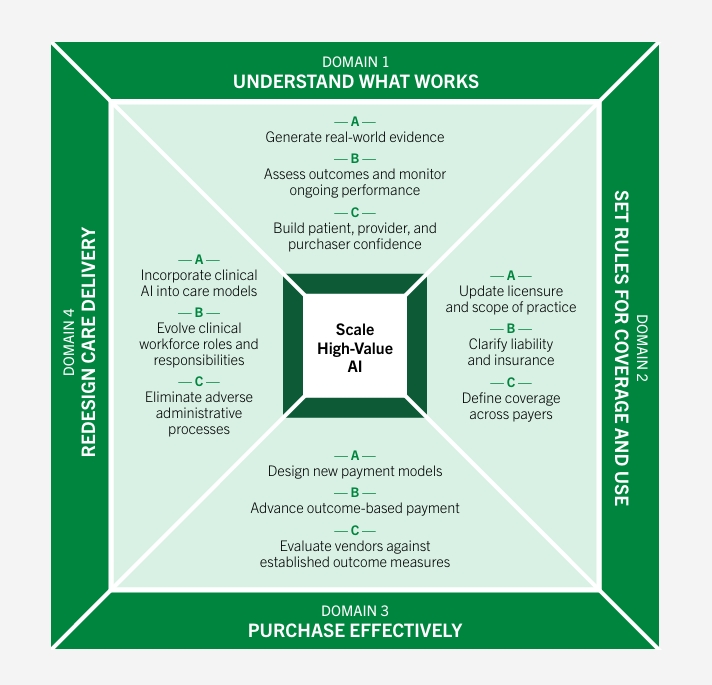
PHTI defines high-value AI as technology that measurably improves health outcomes, expands access to care, and lowers spending. Its report argues that its impact depends not only on what the technology can do, but also on the incentives and workflows surrounding it.
The institute proposes a roadmap for scaling high-value AI in healthcare, highlighting four areas: understanding what works, setting clear rules for coverage and use, purchasing effectively, and redesigning care delivery. The report also emphasizes real-world evidence, ongoing performance monitoring, and workflows that make appropriate use of human oversight.
That points to a practical set of questions for organizations evaluating AI:
- What specific problem are we trying to solve?
- How will we measure whether the solution improves access, outcomes, or operational performance?
- What should happen when a case needs human review or escalation?
- How will the tool fit into existing systems, roles, and patient communications?
- Will it reduce work across the process—or shift it to another team?
These questions help teams evaluate value beyond speed, activity, or the number of tasks automated.
People Make It Work
AI can help with routine steps such as scheduling, eligibility checks, documentation, and follow-up. But healthcare operations also depend on helping people understand what happens next, communicating across languages and cultural contexts, resolving exceptions, and coordinating handoffs. These moments call for empathy, judgment, and clear ownership—not just faster processing.
That is where specialized operational teams can make a difference. Depending on an organization’s needs, Access-Salud can provide bilingual patient access and outreach, scheduling, eligibility verification, patient navigation, Telehealth Navigation, Revenue Cycle Management, and back-office support. These services help teams manage operational tasks and guide patients through the next step, while technology can support—not replace—the human connection and accountability behind the process.
For healthcare organizations, the opportunity is to identify where technology and people can work together to make care easier to access and operations more reliable.
Start with the workflow—and measure what changes
A thoughtful approach starts with a real operational challenge, examines the full workflow, defines meaningful measures, and keeps accountability clear.
Before choosing the next tool, map the work around it. A clearer view of patient access, handoffs, and administrative bottlenecks can help healthcare leaders make better decisions about where technology may help—and where process redesign or additional operational capacity may matter more.
Want to explore how a workflow assessment can help identify opportunities to strengthen patient access and healthcare operations? Contact our team.