The Brain as an Adaptive Organ: Understanding Adult Neuroplasticity
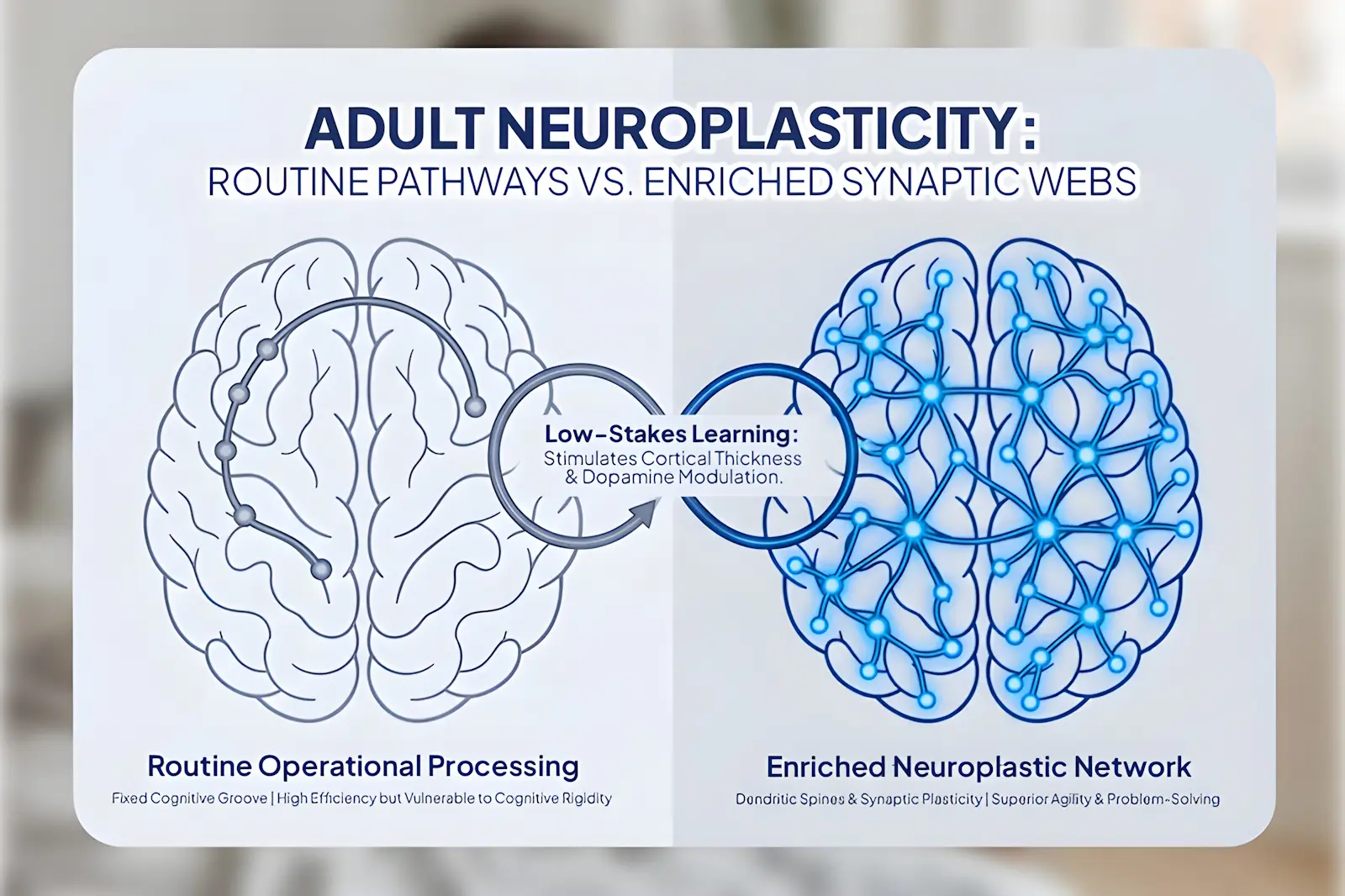
For decades, conventional neuroscience held that the adult human brain was largely fixed in its structure and neural architecture. Today, extensive research in neurobiology has completely dismantled that premise. Through neuroplasticity—the brain’s remarkable capacity to reorganize itself by forming new neural connections throughout life—the adult mind remains continuously adaptable, constantly rewiring in response to new experiences, learning, and environmental demands.
In high-demand professional environments, however, daily routines often lock the brain into familiar, highly specialized cognitive grooves. When administrative specialists, operational leads, and healthcare coordinators perform repetitive processing tasks day after day, the brain optimizes for efficiency within those specific pathways. While this specialization speeds up routine execution, over-reliance on fixed routines can gradually reduce cognitive flexibility and creative problem-solving when unexpected operational challenges arise.
Low-Stakes Learning: The Neuroscience of Non-Commercial Skill Acquisition
To maintain high cognitive agility, the brain requires novel stimulation outside its professional comfort zone. Here’s where non-commercial skill acquisition comes into play: a powerful engine for cognitive enrichment that present a challenge, unlike professional upskilling which carries the implicit pressure of performance reviews, quotas, and business outcomes.
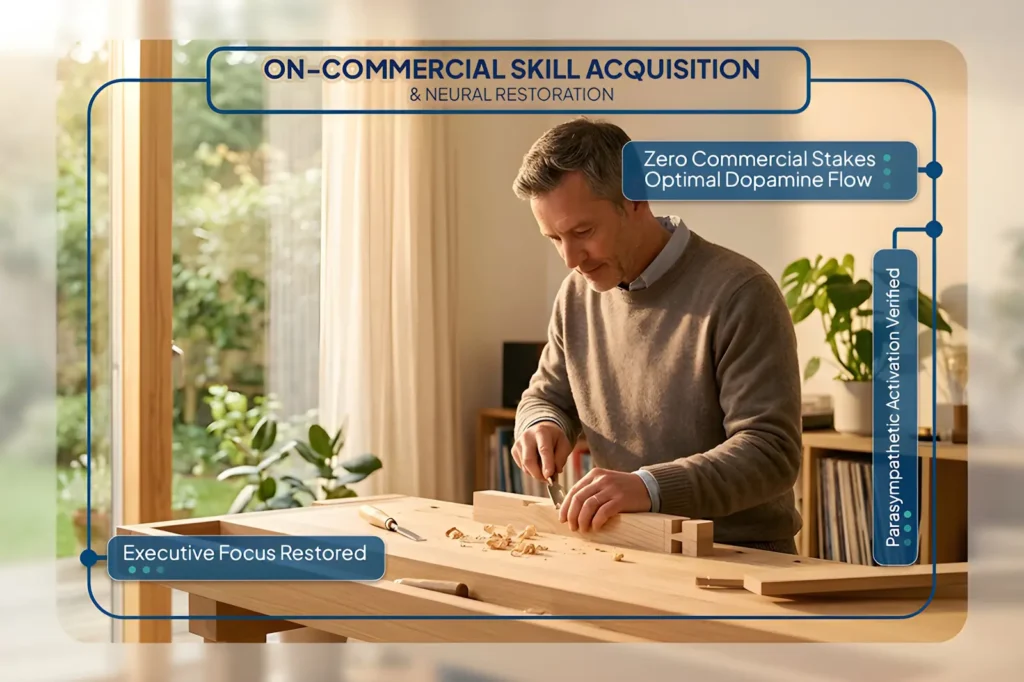
Leisure-based learning —a musical instrument, a complex recipe, a foreign language, woodworking, or a new sport— takes place in a low-stakes environment. From a neurological perspective, this absence of commercial pressure alters how the brain processes failure and trial-and-error:
- Dopamine Modulation: Free from the fear of professional consequences, the brain releases dopamine during incremental mastery, reinforcing motivation and neural engagement.
- Dendritic Branching: Mastering complex physical or cognitive tasks outside of work stimulates the growth of new dendritic spines, physically thickening the cerebral cortex in areas responsible for motor control, auditory processing, and spatial awareness.
- Stress Reduction: Engaging deeply in an absorbing physical or creative skill shifts autonomic nervous system activity from sympathetic high-alert toward parasympathetic recovery, lowering systemic inflammation and mental fatigue.
Cross-Domain Transfer: How Hobbies Enhance Professional Problem-Solving
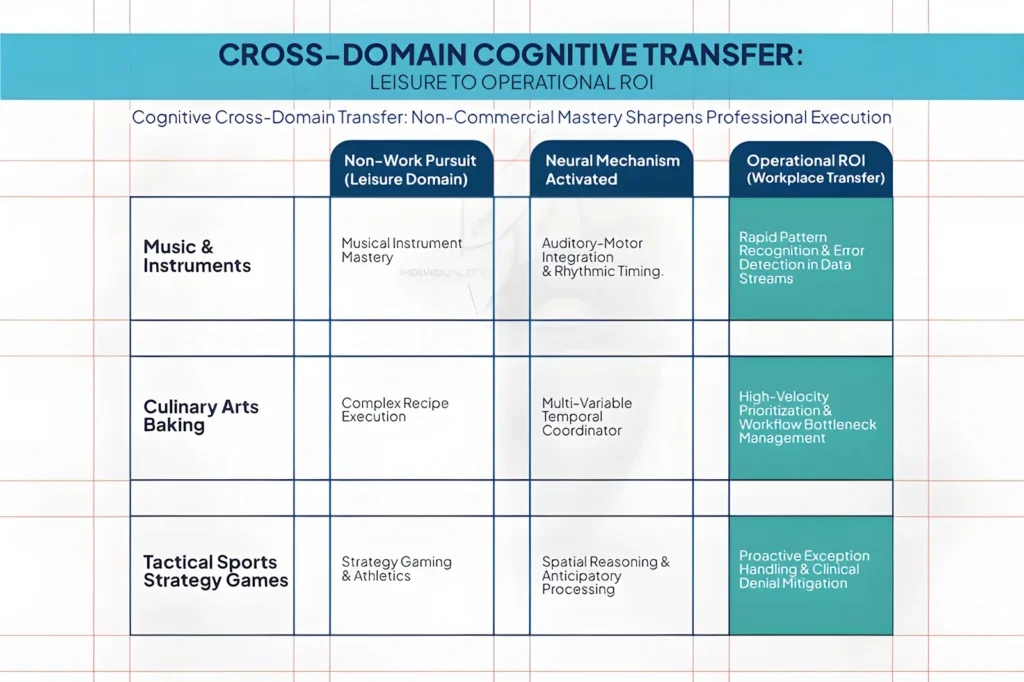
The cognitive benefits of non-work learning do not remain isolated in the kitchen, music studio, or athletic field. Cognitive scientists refer to the application of skills learned in one context to entirely different scenarios as cognitive cross-domain transfer.
When an operations professional learns to read sheet music or master complex culinary timing, they are exercising the brain’s command center for working memory, pattern recognition, and executive control.
When faced with a complex operational bottleneck or a data discrepancy during office hours, an employee with rich neural diversity can draw on broader cognitive frameworks, identifying novel solutions faster than someone operating within rigid analytical constraints.
Cultivating Cognitive Resilience Across Operational Teams
Organizations that achieve long-term operational excellence understand that talent development extends beyond traditional software training and procedural manuals. When companies encourage continuous personal growth, they build a culture of curiosity and psychological resilience.
By fostering an environment where team members are supported as whole individuals, organizations ensure that their specialists maintain the sharp analytical focus required to support complex healthcare operations and administrative workflows.
Conclusion: Investing in Cognitive Growth Beyond the Desk
Professional sharpness is not built by grinding through endless operational checklists; it is sustained by feeding the brain a rich diet of novel challenges, creative expression, and physical skill building. By embracing non-work skill acquisition as a legitimate driver of professional performance, knowledge workers can protect their mental reserves and sharpen their problem-solving edge.