
The Death of Self-Attestation and “Addressable” Compliance
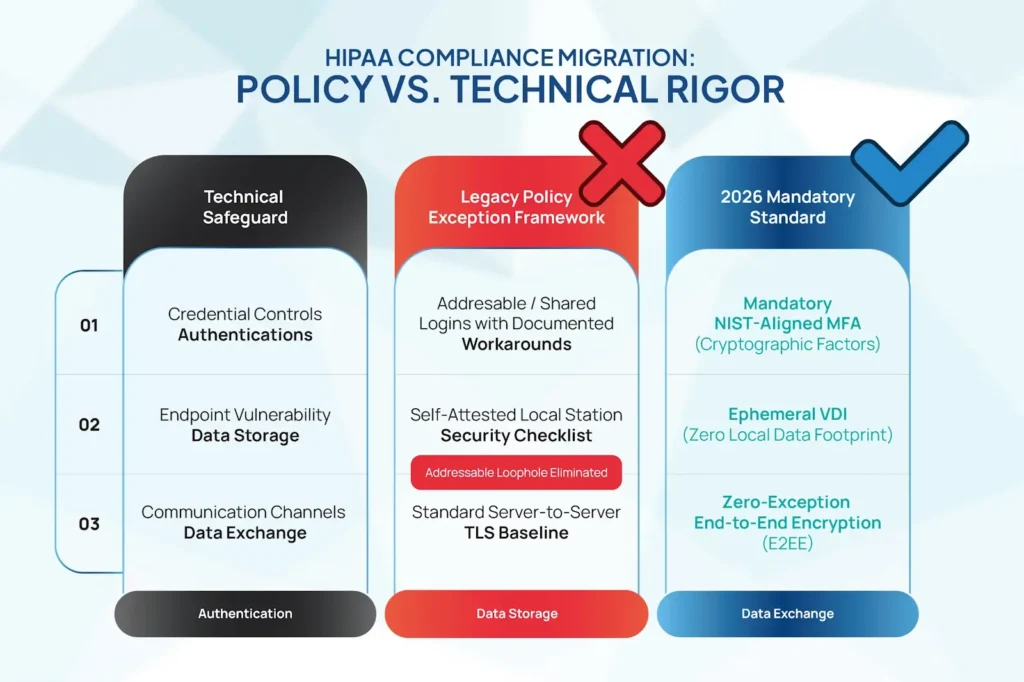
For years, healthcare legal counsel and compliance officers evaluated third-party vendors through a relatively predictable, policy-heavy lens. A business associate agreement was signed, a high-level security questionnaire was completed, and many technical protections under the HIPAA Security Rule were categorized as “addressable”. If a Business Process Outsourcing (BPO) vendor found certain controls—like universal Multi-Factor Authentication or granular network segmentation—to be operationally inconvenient, they could simply document a compensating workaround.
In the 2026 compliance landscape, that regulatory flexibility has completely dissolved. The latest federal updates to the HIPAA Security Rule have formally eliminated the “addressable” loophole, elevating core technical safeguards into non-negotiable mandates for covered entities and business associates alike. Self-attestation is no longer sufficient.
Today, managing vendor risk is an active, technical audit exercise designed to protect organizations from severe supply chain liabilities.
The Supply Chain Matrix: Where Modern Vulnerabilities Sit
The urgency driving this regulatory shift is rooted in a sobering operational reality: the modern healthcare data breach is no longer defined by lost laptops or single-site network intrusions. It is defined by massive, systemic vendor compromises. Recent landmark cyber incidents—including historical ransomware disruptions at enterprise business associates—have proven that a healthcare organization’s security perimeter is only as strong as its external administrative partners.
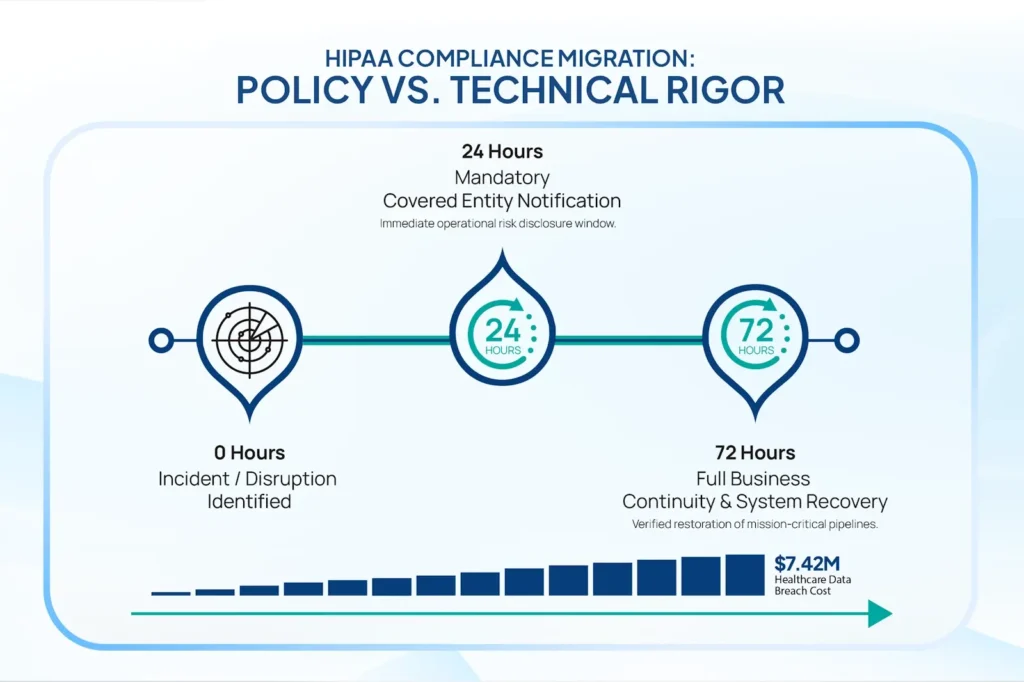
With the average cost of a healthcare data breach climbing to $7.42 million, and hacking accounting for over 80% of all large-scale compromises, third-party risk management is now a primary boardroom concern. When a medical group offloads critical functions like advanced claims recovery or patient navigation, it is not offloading liability.
A secure, modern BPO infrastructure must move away from shared network structures and open digital environments, pivoting instead to a strict architecture of Zero Trust data isolation.
The Operational Blueprint: Technical Pillars of a Secure 2026 BPO Architecture
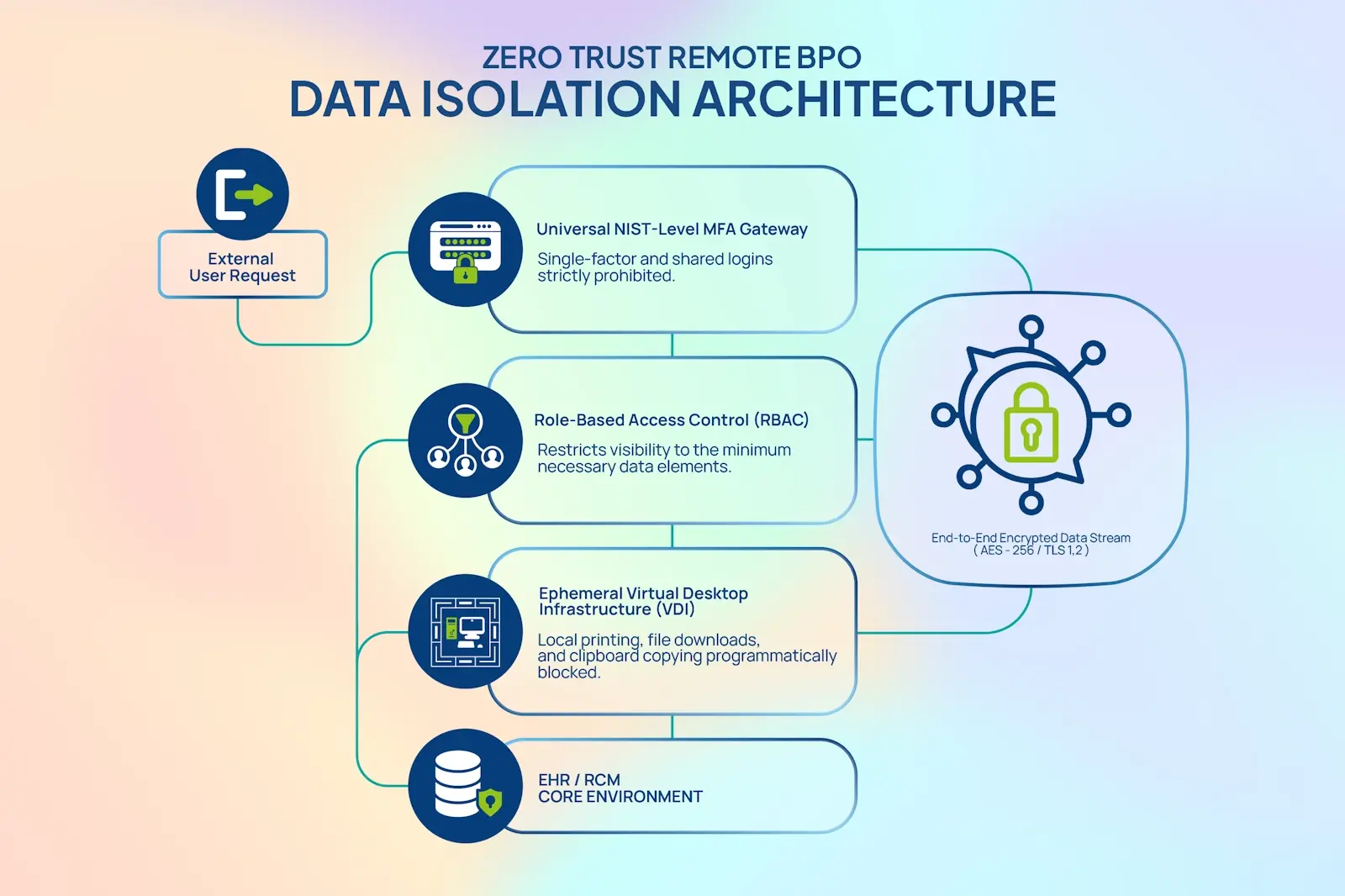
To protect electronic Protected Health Information (ePHI) across distributed workflows, compliance and security leaders should require their BPO partners to verify five core technical safeguards:
[External BPO Network]
│
▼
┌─────────────────────────┐
│ Universal NIST-Level MFA│ ◄── Single-factor/shared logins prohibited
└────────────┬────────────┘
▼
┌─────────────────────────┐
│ Role-Based Access (RBAC)│ ◄── Restricts visibility to minimum necessary data
└────────────┬────────────┘
▼
┌─────────────────────────┐
│ Isolated Virtual Desktop│ ◄── Zero data stored locally; clipboard blocked
└────────────┬────────────┘
▼
[EHR / RCM Core Environment]
- 1. Zero-Exception Cryptographic Controls: All data must be secured using AES-256 encryption at rest and TLS 1.2 or higher in transit. Furthermore, standard server-to-server TLS is no longer sufficient for communication; any email or message exchange containing ePHI must utilize end-to-end encryption.
- 2. Mandatory NIST-Aligned MFA: Password-only access to billing engines, client portals, or virtual desktops is an immediate compliance violation. BPO teams must enforce multi-factor authentication across all environments, utilizing distinct cryptographic or hardware-token factors.
- 3. Ephemeral Virtual Desktop Infrastructure (VDI): Secure BPO operations eliminate local data storage entirely. Remote agents should work exclusively within secure, monitored virtual desktop environments where local printing, file downloads, and clipboard copying are programmatically blocked, ensuring data never leaves the domestic host environment.
- 4. Strict Role-Based Access Controls (RBAC): Aligning with the HIPAA “Minimum Necessary” standard, users must only see the specific data fields required to complete their immediate task. A patient scheduling coordinator, for example, has no operational need to view historical clinical narratives or detailed diagnostic coding pipelines.
- 5. Compressed Notification & Contingency Windows: Under current 2026 parameters, business associates are held to rigid, prescriptive response timelines. In the event of a contingency plan activation or system disruption, vendors must notify their covered entities within 24 hours, backed by verified capabilities to restore mission-critical systems within a 72-hour recovery window.
Shifting from Paper Policy to Technical Rigor
In an era of highly aggressive, financially motivated cybercrime, vendor risk management cannot survive as a passive checking of boxes or a collection of unverified promises. A business associate agreement is a vital legal necessity, but it is a reactive mechanism; it does not stop an active network intrusion or prevent credential theft.
True operational resilience requires partnering with specialized healthcare operators who build compliance directly into their code, their networks, and their daily staff operations. By enforcing uncompromising data isolation, zero-exception access control, and strict technical tracking, healthcare administrators can confidently scale their external operations without compromising their security posture.
To evaluate how your organization can align its third-party administrative pipelines with 2026 HIPAA security standards, contact us today to schedule a comprehensive operational risk assessment with our Management Team.