
As of 2026, the “grace period” for information blocking is officially over. Under the HTI-1 Final Rule, the Office of the Inspector General (OIG) has begun enforcing substantial civil monetary penalties for practices that “unreasonably interfere” with the access, exchange, or use of electronic health information (EHI).
For many healthcare leaders the risk isn’t intentional secrecy, rather administrative friction: If your staff is slow to respond to a digital record request, or if your portal isn’t configured to the latest USCDI v3 standards, you may be information-blocking without even knowing it.
Use this checklist to ensure your administrative engine is compliant and your practice is protected.
1. The USCDI v3 Data Baseline
The HTI-1 rule mandates that all EHI must be shared according to the United States Core Data for Interoperability (USCDI) Version 3 standards.
- The Check: Does your EHR export include the new required data elements, such as expanded patient demographics and social determinants of health (SDoH)?
- Access-Salud Tip: Our back-office teams audit data entry to ensure that the information being “blocked” isn’t just “missing” due to poor intake habits.
2. The “Timeliness” Test
Under the new enforcement, “as soon as possible” has been strictly defined. Unjustified delays in releasing lab results or clinical notes to a patient portal can be flagged as a violation.
- The Check: Does your staff have a “Gatekeeper” mentality? If a patient requests digital records, is there a manual approval process that takes more than 48 hours?
- Access-Salud Tip: Implement Instant-Release Protocols, ensuring that automation handles the speed while humans handle the nuanced exceptions.
3. Reviewing Your “Exceptions” Policy
There are eight specific exceptions to information blocking (e.g., Preventing Harm, Privacy, Infeasibility). However, these cannot be used as a blanket excuse.
- The Check: Are your staff members citing “Privacy” as a reason to deny a request when the patient has already provided valid digital authorization?
4. Third-Party App Accessibility
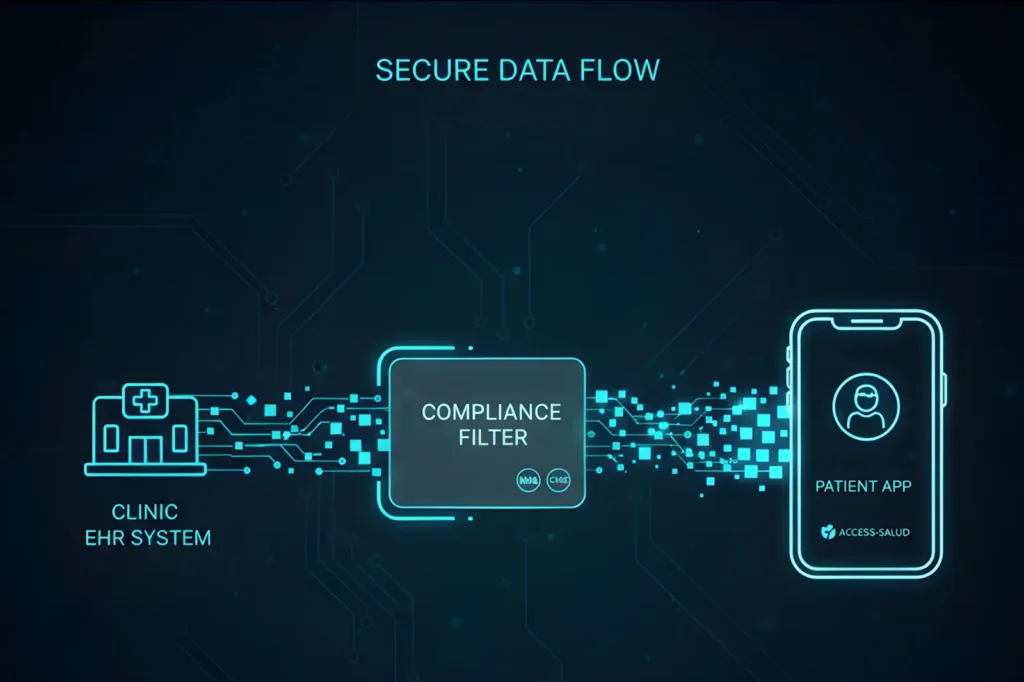
Patients now have the right to access their data via the smartphone app of their choice, not just your specific patient portal.
- The Check: Is your system “API-Ready”? If a patient wants their data sent to a third-party wellness app, can your administrative team facilitate that without claiming “technical inability”?
5. The Staff “Knowledge Gap” Audit
The most common cause of a compliance breach is a front-desk agent who says, “We don’t send digital records to outside apps.” In 2026, that sentence is a liability.
- The Check: When was the last time your administrative team had a refresher on the HTI-1 Information Blocking definitions?
Conclusion: Compliance is a Competitive Advantage
In 2026, information blocking is a reputation risk. Patients expect their data to move as fast as they do, and by streamlining your data access policies you are building a brand of transparency and trust.
Is your team accidentally creating a compliance bottleneck? Let Access-Salud help you secure your workflows. Schedule a Consultation today.