The Administrative Drag of Reactive Intake
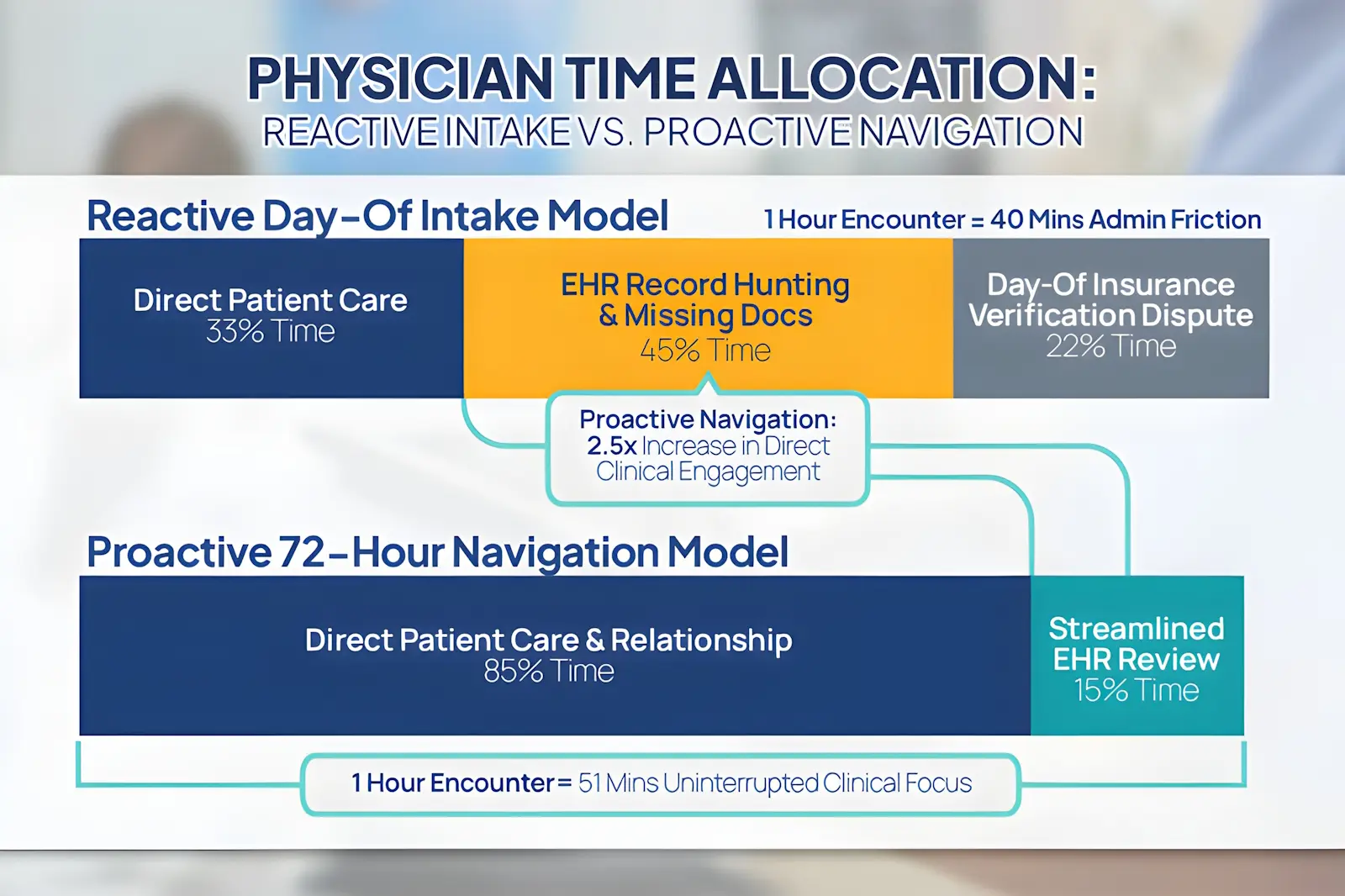
In many outpatient clinics, patient intake remains a reactive, day-of ritual. Patients arrive minutes before their appointment to complete clipboards or struggle with portal forms. When coverage details are outdated, medical histories are incomplete, or prior records are missing, the clinical schedule collapses.
Research published in the Annals of Internal Medicine demonstrates the severe impact of this administrative burden: for every hour doctors spend in direct clinical interaction with patients, they spend nearly two hours on administrative tasks and EHR documentation. Much of this time is spent during the patient encounter hunting down missing lab results, specialist notes, and unverified coverage details—turning clinical care time into data entry.
The Mechanics of 72-Hour Pre-Visit Preparation
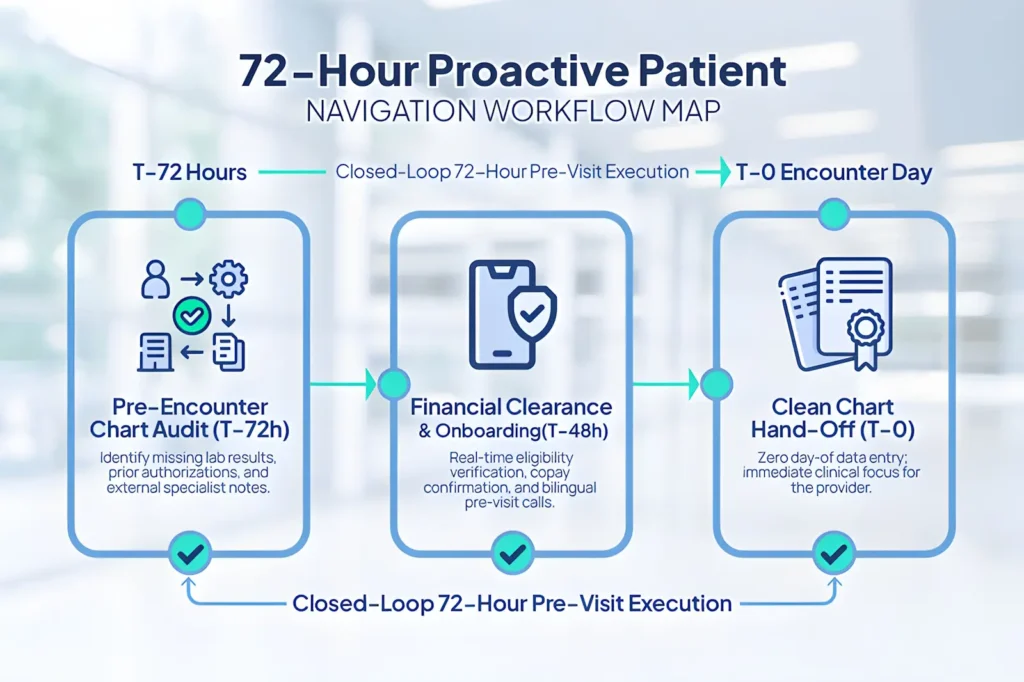
Proactive patient navigation fundamentally shifts when and where data collection occurs. Rather than treating intake as a front-desk check-in task, navigation teams initiate pre-visit workflows 48 to 72 hours prior to the encounter.
Conducting structured pre-appointment outreach—which combines clinical pre-screening with active identification of logistical and administrative barriers—significantly improves appointment adherence and streamlines day-of clinic flow.
- Pre-Encounter Chart Completion: Navigators review upcoming schedules 72 hours out, identifying missing diagnostic reports, external records, or referral authorizations, and retrieving them before the provider opens the chart.
- Upfront Financial Clearance: Insurance eligibility, copays, and deductible statuses are confirmed in advance, resolving coverage disputes before the patient arrives.
- Targeted Patient Onboarding: Patients receive explicit pre-visit instructions—such as fasting guidelines, medication list preparation, and location logistics—in their primary language.
Eliminating Friction Across Virtual and Multilingual Access
Pre-visit preparation is equally vital for digital and non-English speaking patient populations. Telehealth encounters frequently stall due to technical friction at start time—uncalibrated audio, missing portal credentials, or incomplete consent forms.
Dedicated navigators execute pre-visit technical dry-runs, guiding virtual patients through software setups and eliminating telehealth patient tech friction. For non-English speaking patients, integrating structured bilingual patient onboarding workflows consent documents and intake questionnaires are completed with total understanding prior to appointment day.
Protecting Revenue Cycle Integrity at the Digital Front Door
Gathering clean data days before an encounter directly protects practice revenue. Incomplete subscriber IDs, unverified secondary policies, and incorrect demographic formatting represent primary drivers of initial claim rejections.
When navigation specialists verify insurance rules and secure necessary prior authorizations 72 hours early, billing teams can submit clean claims immediately following the visit. Securing complete data upfront directly drives first-pass RCM billing accuracy and eliminates costly administrative rework across the billing cycle.
Operational Execution: Scaling LATAM Navigation Teams
Executing deep pre-visit navigation internally often fails because front-desk staff are occupied with physical check-ins and incoming calls.
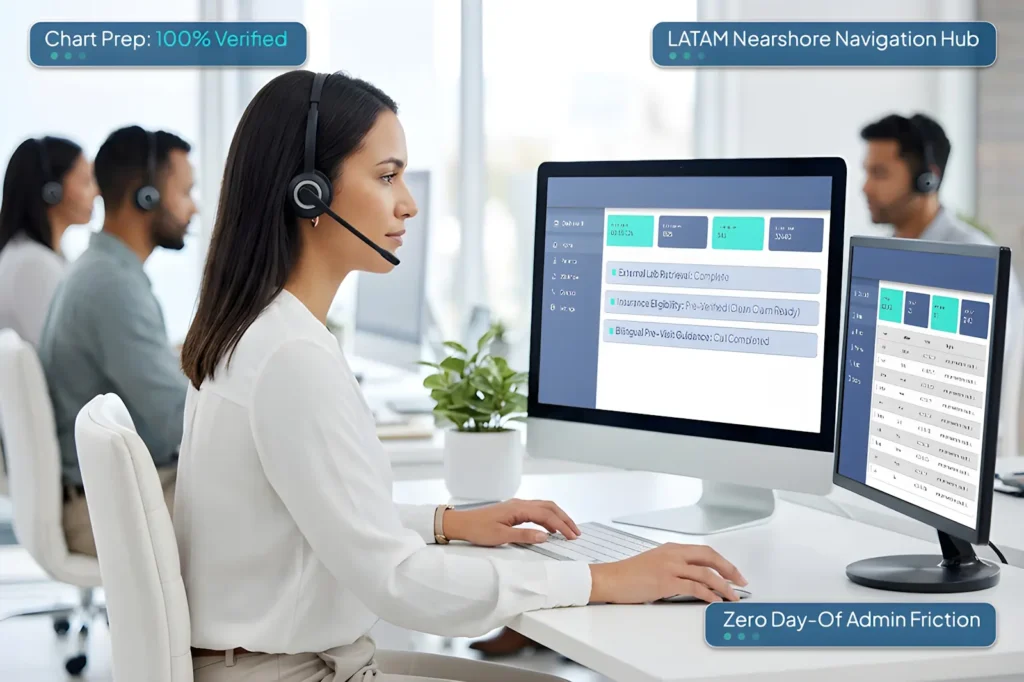
Offloading pre-visit data gathering to dedicated nearshore teams in Latin America provides a scalable operational solution. Partnering with specialized patient navigation and telehealth support services allows nearshore specialists to manage record retrieval, eligibility verification, and pre-visit calls behind the scenes. Providers start every morning with 100% complete, verified patient charts.
Conclusion: Transforming Waiting Rooms into Care Hubs
Proactive patient navigation replaces front-desk friction with structured operational execution. Resolving clinical and financial requirements days in advance reduces waiting times, protects revenue, and gives providers their clinical time back. To learn how our nearshore navigation teams can optimize your pre-visit workflows, connect with our operations team today.